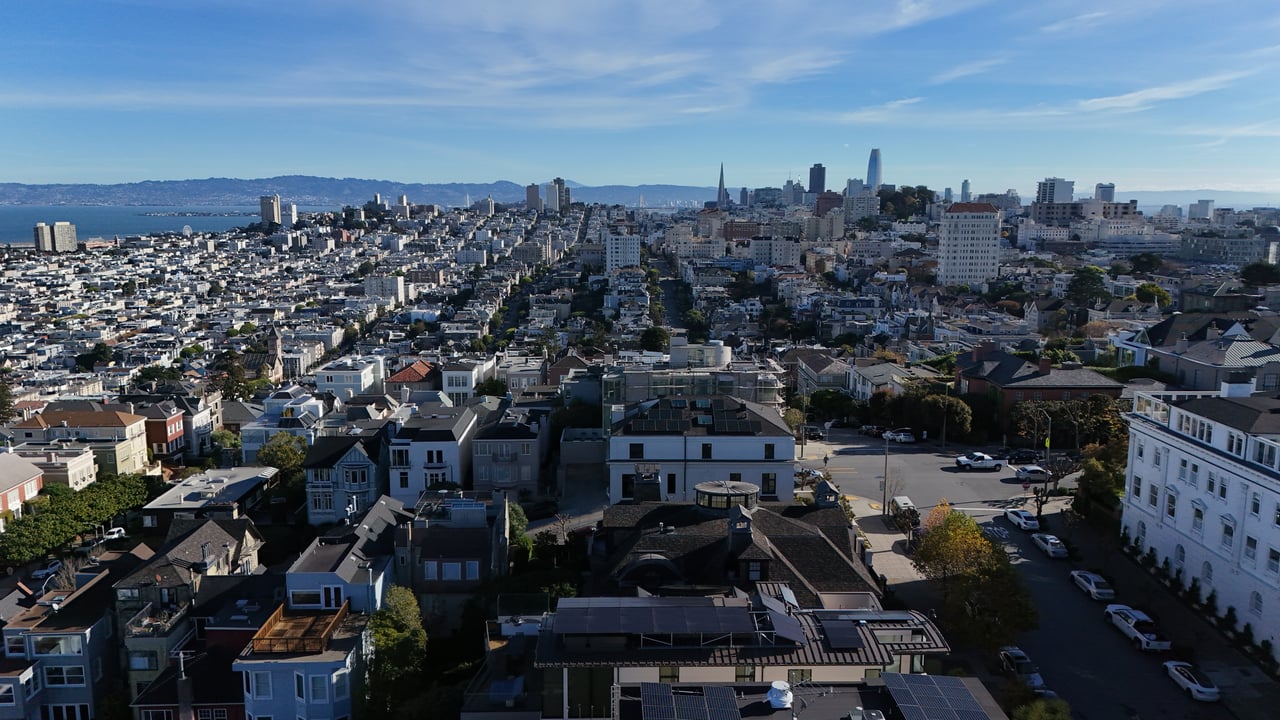
San Francisco Multi-Family Market Update: The Collapse-to-Comeback Story (2026)
Quick answer: San Francisco's multi-family market has staged one of the sharpest reversals of any major asset class in the city. After sales volume, prices, and price-per-square-foot all fell double digits between 2019 and 2023, Q1 2026 data shows 2-to-4-unit buildings up 21% in median sale price year over year, and 5-plus-unit buildings posting their strongest first quarter since 2018. Rents have surpassed pre-pandemic highs and now exceed New York City's, driven by falling crime, returning office workers, and a wave of AI-industry wealth concentrated in San Francisco.
Surging rents have pushed San Francisco past New York as the most expensive place to rent in the entire country. At a time when rent growth is flat across most of the U.S., one- and two-bedroom rents here climbed 15 to 22% year over year — and that's before the bulk of the current liquidity boom has even worked its way into the market.
I'm Austin Klar. I practiced law in San Francisco before moving into real estate, and 2026 has produced some of the strongest multi-family numbers this city has seen since before the pandemic. If you own income property here, are thinking about selling, or are an investor evaluating San Francisco, here's the full collapse-and-comeback story, with the data behind it.
How Bad Did San Francisco's Multi-Family Market Get After 2020?
To understand how strong things are right now, it helps to remember how bad they got. San Francisco entered 2020 as one of the tightest rental markets in the country — vacancy near historic lows, rents at or near all-time highs, and multi-family buildings trading at premium prices because investors considered the fundamentals close to bulletproof: constrained housing supply, a massive tech workforce, low office vacancy, and a city people were desperate to live and work in.
Then COVID hit, and the shift here was more severe than in almost any other major U.S. city. Remote work broke the core logic that made San Francisco real estate valuable — when you can work from anywhere, paying $3,500 for a studio stops making sense next to a house in Austin or Denver for the same money, especially as crime, homelessness, and retail and restaurant closures visibly worsened downtown.
Tens of thousands of people left. San Francisco lost about 10% of its population within a year. Landlords who had never once offered a concession were suddenly dangling months of free rent just to fill units. Then, starting in 2022, interest rates climbed as rents kept falling, making multi-family deals harder to underwrite and pushing cap rates up.
The numbers from that period were stark: between 2019 and 2023, the number of multi-family sales in San Francisco dropped more than 22%, average sale price fell over 17%, price per square foot dropped more than 10%, and the typical multi-family property took over two months to sell. Plenty of people wrote San Francisco off as finished. What's happened since is close to a complete reversal.
What Turned San Francisco's Multi-Family Market Around?
A handful of forces converged at once, and together they flipped the script entirely.
The City Itself Stabilized
Crime, once a constant headline, is now at multi-decade lows for both violent and property crime — verifiable on the SF Crime Dashboard. Unsheltered homelessness has been declining, with the Mayor's Office reporting the lowest encampment count on record. Retail vacancy has been improving too: Cushman & Wakefield puts the overall vacancy rate at 6.3%, down from 7.0% a year earlier. Tourism is rebounding sharply — SF Travel projects San Francisco will welcome 24.2 million visitors in 2026, with visitor spending reaching $9.9 billion, surpassing the city's 2019 record of $9.6 billion.
Return to Office
Fully remote work is largely over for the industries that drive this city. San Francisco posted the nation's strongest year-over-year gain in office visits, up 8.2%, according to analytics firm Place.ai. People who left during the pandemic but kept their San Francisco jobs are increasingly being pulled back, and new hires at San Francisco companies need somewhere to live. The city isn't just becoming more desirable — people are, in many cases, being required to live here again.
The AI Factor
This is the story driving everything right now. Unlike the last major tech cycle, which centered on Silicon Valley, the AI industry has planted its flag directly in San Francisco. OpenAI, Anthropic, and other AI companies are signing massive office leases — the Financial District and Mission Bay alone captured 71% of office leasing growth in Q1 2026, and office demand has now surpassed pre-pandemic levels. That's on top of enormous venture capital investment, with more capital arriving through public offerings, putting real cash in the hands of employees who need housing near work.
Some AI startups are leasing entire apartment floors for employees. Others are offering monthly rent stipends of $1,000 or more for staff who live within walking distance of the office. The result: a wave of high-earning workers flooding into a city that hasn't built enough housing to accommodate them.
Vacancy has fallen below pre-pandemic levels to new lows, and according to CoStar, the average San Francisco metro apartment now rents for more than 9% above where it stood a year ago. One-bedrooms are running $4,000-plus a month, two-bedrooms $5,500 — enough to surpass New York City for the highest rents in the country. For multi-family investors, that matters directly: higher rents mean higher net operating income, and higher NOI means higher building values, especially with interest rates having eased slightly compared to a year ago.
What Do the Q1 2026 Numbers Show for 2-to-4 Unit Buildings?
San Francisco's 2-to-4-unit market just posted its strongest quarter since spring 2022.
● Median sale price: just over $2 million, up more than 21% compared to Q1 2025 — the strongest price appreciation this segment has seen since before the pandemic.
● Price per square foot: over $700, up about 18% year over year.
● Sale-to-list dynamics: the average building is selling for almost 20% above its list price, and 59% of properties are selling over asking — up from 45% a year earlier.
● Speed: days on market dropped from 22 in Q1 2025 to just 17 in Q1 2026.
● Absorption: about 32% of listings went into contract, the highest Q1 absorption rate since early 2022, right before interest rates began climbing.
Sales volume has also risen steadily for three straight years, tracking directly with rising rents and improving city conditions. When more deals pencil, sales and pricing both climb — it's straightforward math for investment property.
What Do the Q1 2026 Numbers Show for 5-Plus Unit Buildings?
The institutional and serious investment community is seeing similar momentum. This segment posted its highest first-quarter sales total since 2018, on the heels of 2025's highest annual sales volume in 15 years.
● Median sale price: $2.65 million, up 10.5% year over year.
● Price per square foot: $432, up about 10%.
● Cap rates: averaging 5.9% in Q1 2026, down from 6.21% in Q1 2025 — compression that signals pricing is running ahead of current rents, largely because rent-controlled units lag behind market pricing, and investors are betting on continued rent growth.
● Gross Rent Multiplier: up from 11.0 a year ago to 11.7 so far this year, another sign investors are paying more per dollar of rental income.
● Over-list sales: nearly 36% of 5-plus-unit buildings sold over list price in Q1 2026, compared to just 12.1% in Q1 2025 — a fundamental shift in competitive dynamics for this asset class.
What Does This Market Mean If You Own a Multi-Family Building?
If you own a multi-family building in San Francisco — particularly one you bought years ago and watched stagnate through the pandemic — this is a moment worth paying close attention to. Values are up significantly, and current dynamics suggest they'll keep climbing. Competition among buyers is intense and getting more intense. The bid-over-ask dynamic that used to be reserved for single-family homes and premium condos is now showing up in multi-family too, which means valuations you received even a year ago are likely outdated.
What Does This Market Mean If You're Investing in Multi-Family?
For investors looking to buy, the window that existed a year or two ago — when buildings traded at distressed or near-distressed prices with more generous cap rates — is narrowing. Prices have moved meaningfully. But rents are still rising, vacancy is at pre-pandemic lows and heading lower, and the structural drivers behind demand — AI employment, return to office, constrained housing supply — aren't going away soon. It's a tougher market to buy into today than it was a year ago, and it stands to get tougher still as rents keep climbing.
San Francisco Multi-Family Market FAQ
Is now a good time to sell a multi-family building in San Francisco?
Current data suggests yes for many owners — median prices are up double digits year over year across both the 2-to-4-unit and 5-plus-unit segments, days on market have dropped, and a growing share of buildings are selling over asking price.
Why are San Francisco rents higher than New York's?
A combination of falling vacancy, return-to-office mandates, and a concentrated wave of AI-industry wealth from companies like OpenAI and Anthropic has pushed one- and two-bedroom rents up 15-22% year over year, pushing average rents past New York City.
Are cap rates compressing in San Francisco's multi-family market?
Yes. Average cap rates for 5-plus-unit buildings fell from 6.21% in Q1 2025 to 5.9% in Q1 2026, reflecting investor confidence that rents, including those on rent-controlled units, have room to keep growing.
What's driving demand for San Francisco multi-family real estate right now?
Three factors together: a genuine improvement in city conditions (falling crime, declining homelessness, recovering retail), a return-to-office wave pulling workers back into the city, and a concentration of AI-industry wealth and hiring that's flooding the rental market with high-earning tenants.
Own a Building, or Looking to Invest? Let's Talk Numbers
Whether you own a building and want to know what it's actually worth today, or you're an investor trying to figure out where to look — including how to navigate tenant occupancy, protected status, outdated infrastructure, or San Francisco's regulatory environment around multi-family — this is the kind of market where an outdated valuation or a slow decision can cost real money.
I've lived in San Francisco for over 13 years, know these neighborhoods inside and out, and have helped clients on both the buy side and the sell side of multi-family transactions. Reach out — happy to be a resource, no pressure, no obligation.