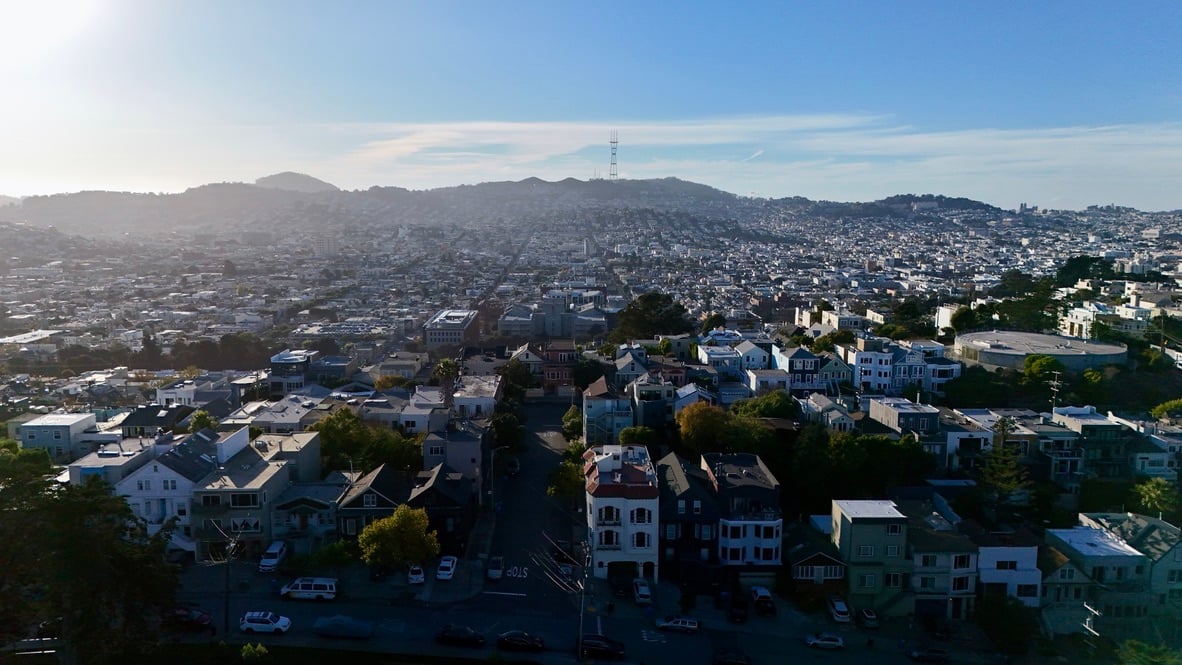
Major Changes Coming to Downtown San Francisco: The Recovery in 2026
Quick answer: Downtown San Francisco, one of the slowest metro areas in the country to recover from the pandemic, is in the middle of a genuine turnaround. The Transamerica Pyramid reopened after a $1 billion-plus renovation with new restaurants and office leases at record local prices. The City's Vacant to Vibrant program has filled dozens of empty storefronts, with most pop-ups converting to long-term leases. Luxury brands like Rolex, Burberry, Goyard, and Brunello Cucinelli are opening or expanding flagship stores in Union Square, and monthly open-air events called Downtown First Thursdays are pulling thousands of people back into the Entertainment Zone.
We all know Downtown San Francisco has been one of the slowest metropolitan areas in the country to recover from the pandemic. But the area is undergoing some real transformation that's bringing it closer to a return to its former energy — incredible new developments, innovative strategies to boost retail occupancy, luxury retailers opening new spaces, brand new restaurants and hospitality spots, and a lot more.
I'm Austin Klar, a lawyer turned real estate agent here in San Francisco and Marin County. In this post I'm breaking down some of the most exciting changes happening in Downtown San Francisco right now, and how the City, developers, and entrepreneurs are getting creative to help bolster the area's recovery post-pandemic.
Let's start with perhaps the biggest change to come to downtown: the re-opening of the Transamerica Pyramid.
The Transamerica Pyramid's Billion-Dollar Rebirth
The iconic 48-story tower was purchased in October 2020 by SHVO, which has invested over $1 billion into rejuvenating not just the building but the entire surrounding neighborhood.
The goal of the project was to turn the building into a true trophy property with extremely luxurious spaces and amenities. SHVO built its reputation creating ultra-high-end hospitality spaces, and the firm is applying that same concept to the office — the idea being to actually give people a reason to come to work.
● Design team: Foster + Partners, one of the world's pre-eminent architecture firms, led the design, with a focus on public spaces, office interiors, and amenities, including a 45,000-square-foot social club.
● Streetscape: The formerly unused Mark Twain Street on the block was converted into a tree-lined pathway with shops and seating that leads straight to Redwood Park.
● Expansion: SHVO is also looking to renovate an adjacent nine-story historic building and expand it by several floors.
● Leasing momentum: SHVO has already secured leases at prices never before achieved outside of New York — a strong signal for the surrounding office market.
The building officially re-opened in September with a major celebration. Its entrance now includes a small coffee shop, a flower shop, and a bookstore, and new tenant-only amenity spaces host weekly happy hours with sweeping views of the city.
New Restaurants Anchoring the Pyramid
A brand-new restaurant, Cafe Sebastian, opened at an adjacent building at the Transamerica Center, helmed by renowned chef Brad Kilgore — who has worked at not one but two 3-Michelin-star restaurants and was named Best New Chef in America by Food & Wine Magazine. Kilgore also has plans for a second restaurant, AMA, a Japanese-Italian fusion concept; both spots will be open to the public. He's additionally helming the food menus for tenant-only spaces on the 26th-floor lobby and the 48th-floor cocktail lounge — a real coup for downtown to land a chef of his caliber.
Vacant to Vibrant: A Smarter Way to Fill Empty Storefronts
Vacant to Vibrant is a City program creating dozens of pop-up food and retail offerings across downtown, and it's already proving to be one of the more innovative tools the City has used to restore retail.
● How it works: Each participating business gets three months of free rent funded by grants from a non-profit called SF New Deal, plus help with permitting and startup expenses. The goal is to encourage small businesses to test new locations and new audiences while still serving their existing clientele.
● Early results: The first wave of pop-ups opened in the Financial District and SoMa, and seven of the first nine are already converting to direct, long-term leases — a strong early sign that this is more than a temporary fix.
● Expansion to Union Square: The program is now expanding into hard-hit Union Square, which has a roughly 23% retail vacancy rate compared to the citywide average of about 7%.
● Scale: 25 new storefronts are planned for the Powell Street corridor and the rest of downtown, backed by $3 million in new funding from the Mayor's Office and the Office of Economic and Workforce Development. Over 1,200 businesses have applied to take part.
Luxury Retail Is Betting Big on Downtown
It isn't just experimental pop-up retail seeing a comeback downtown — major luxury brands are renewing their commitments and expanding, which signals real confidence in the area's future.
● Burberry: Investors recently purchased Burberry's flagship location in Union Square, and Burberry opened a new location down the street.
● Goyard: The luxury trunkmaker is expanding its footprint, taking over a vacant storefront next door formerly occupied by Montblanc.
● Brunello Cucinelli: Expanded its footprint with separate men's and women's stores on Grant Avenue, near the new Goyard location.
● Luxury watchmakers: Rolex, Patek Philippe, and Breitling each opened new flagship stores in Union Square.
● Other new arrivals: Fashion house Max Mara opened a new store, and Christopher Clark Art Gallery opened a new space in the area. Nintendo has plans to open a new flagship retail store in Union Square in 2025.
Downtown First Thursdays: Getting People Back on the Street
New stores don't matter much without foot traffic, and the City has gotten genuinely creative about drawing people back downtown while the office market charts its own path to recovery. The program is called Downtown First Thursdays — an open-air festival held the first Thursday of every month in what's been dubbed the Entertainment Zone, an outdoor area where open containers are allowed. The program launched in the summer of 2024 and has been a clear success.
● Sales impact: Three local bar staples — Harringtons, Schroeders, and Royal Exchange — have hosted multiple events and saw sales tied to those events increase between 700% and 1,500%.
● Turnout: Two flagship events this year — an Oktoberfest and a Halloween event called Nightmare on Front Street — each brought over 10,000 people to downtown.
● Expansion: The City just announced a second Entertainment Zone at Thrive City, the restaurant hub surrounding the Chase Center.
These free events are a genuinely creative use of space, and they've done a real job of getting people to return to downtown and spend money at local businesses.
What This Means If You're Thinking About San Francisco Real Estate
There's a lot changing in San Francisco right now — from these creative new commercial spaces, to return-to-office policies, to shifts in how the City addresses crime and homelessness. Downtown especially is poised for a real transformation back toward its former energy, and that momentum tends to ripple outward into housing demand, both for people who want to live close to the action and for investors watching where the city is headed next.
If you're thinking about relocating to San Francisco, the market has undergone some real shifts since the pandemic. I've lived here for over 13 years, and before real estate I practiced law at one of the largest firms in the world — which shapes how I think about contracts, negotiations, and timing for my clients today. I've helped people relocate here from all over the country, and I'm happy to be a resource for you, no pressure, no obligation.
Frequently Asked Questions
Is downtown San Francisco actually recovering?
Yes — while downtown was one of the slowest metro areas in the country to recover from the pandemic, recent data points to real momentum: a $1 billion-plus renovation of the Transamerica Pyramid, a retail-vacancy-filling program with a high conversion rate to long-term leases, a wave of luxury retail openings and expansions in Union Square, and a new monthly street festival that's driving major sales increases for local businesses.
What happened to the Transamerica Pyramid?
SHVO purchased the 48-story tower in October 2020 and invested more than $1 billion renovating it and the surrounding neighborhood, working with architecture firm Foster + Partners. The building reopened in September with new restaurants, tenant amenity spaces, and office leases at record local prices.
What is the Vacant to Vibrant program?
It's a City program that gives small businesses three months of free rent, plus permitting and grant support, to test pop-up locations in vacant downtown storefronts. Seven of the first nine pop-ups have already signed on for long-term leases, and the program is now expanding into Union Square with 25 new planned storefronts.
What is Downtown First Thursdays?
It's a monthly open-air festival held the first Thursday of every month in downtown's Entertainment Zone, where open containers are allowed. It brings food trucks, local artisans, musicians, and outdoor bars to the area, and has driven sales increases of 700% to 1,500% at participating local bars.
Are luxury retailers actually investing in downtown San Francisco?
Yes. Rolex, Patek Philippe, Breitling, Burberry, Goyard, Brunello Cucinelli, and Max Mara have all opened or expanded flagship locations in Union Square recently, and Nintendo has announced plans for a new flagship store in the area.
How does downtown's recovery affect San Francisco home prices?
Downtown's recovery is one piece of a broader set of conditions — return-to-office trends, improving retail and street-level activity, and shifting public safety perceptions — that tend to support housing demand both downtown and citywide. If you're evaluating timing for a purchase or sale, it's worth talking through how these citywide trends intersect with your specific situation.
Want to stay on top of what's happening in San Francisco real estate? I make it a point to track developments like these across the city, not just downtown, because they all factor into how I advise buyers and sellers on timing and value. If you're thinking about a move to San Francisco or Marin County, or want a clear read on how these changes are likely to affect the housing market, reach out — I'm happy to be a resource, no pressure, no obligation.