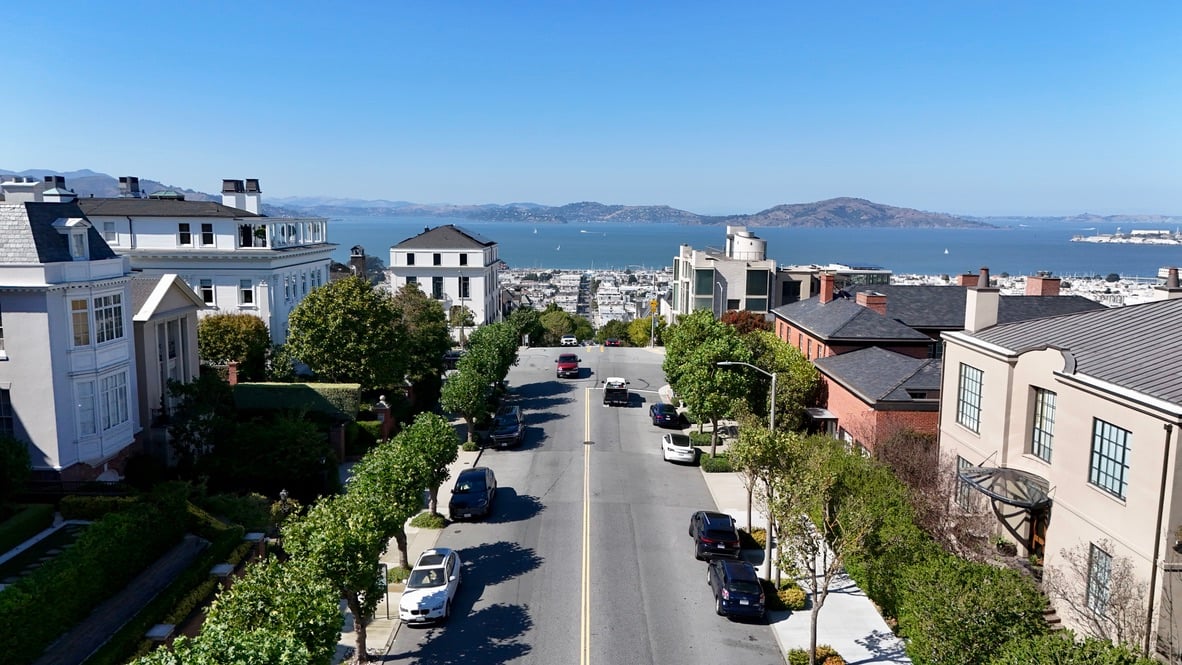
East Pacific Heights vs. West Pacific Heights: Which Side Is Right for You?
Quick answer: Pacific Heights splits into two distinct halves at Fillmore Street. East of Fillmore is denser, with more mid- and high-rise condo and co-op buildings, heavier traffic along Gough, Franklin, and Van Ness, and a shorter commute to downtown. West of Fillmore is quieter, dominated by single-family homes and low-rise buildings, borders the Presidio, and offers better park views at Alta Plaza. Home prices run higher on the west side for single-family homes (about $1,600/sq ft versus $1,200/sq ft on the east), while the east side commands a premium on condos and holds the neighborhood's priciest co-ops, some listing near $5,000/sq ft.
Pacific Heights is routinely ranked among the most desirable places to live in all of San Francisco, with walkable tree-lined streets, incredible food, beautiful park spaces, and panoramic views. But not all of Pacific Heights is created equal.
I'm Austin Klar, a lawyer turned real estate agent in San Francisco and Marin County. I've lived in Pacific Heights for over four years, and between that firsthand experience and touring hundreds of homes in the area with clients, I can tell you that not all parts of the neighborhood share the same characteristics.
In this post, I'm comparing East Pacific Heights versus West Pacific Heights so that if you're thinking about purchasing a home in the area, you have everything you need to know about how the two sides stack up against each other, all in one place.
Where the Line Falls: East vs. West
The broader Pacific Heights neighborhood runs from California Street on the southern end to Green Street on the northern end, and from Lyon Street on the western end to Van Ness Avenue on the eastern end.
Within that footprint, the natural dividing line is Fillmore Street, the neighborhood's main commercial corridor of shops, bars, and restaurants, running north to south through Pacific Heights. For purposes of this comparison, anything east of Fillmore is the east side, and anything west of Fillmore is the west side.
Difference 1: Property Types
For the most part, the eastern span of Pacific Heights is denser than the western span.
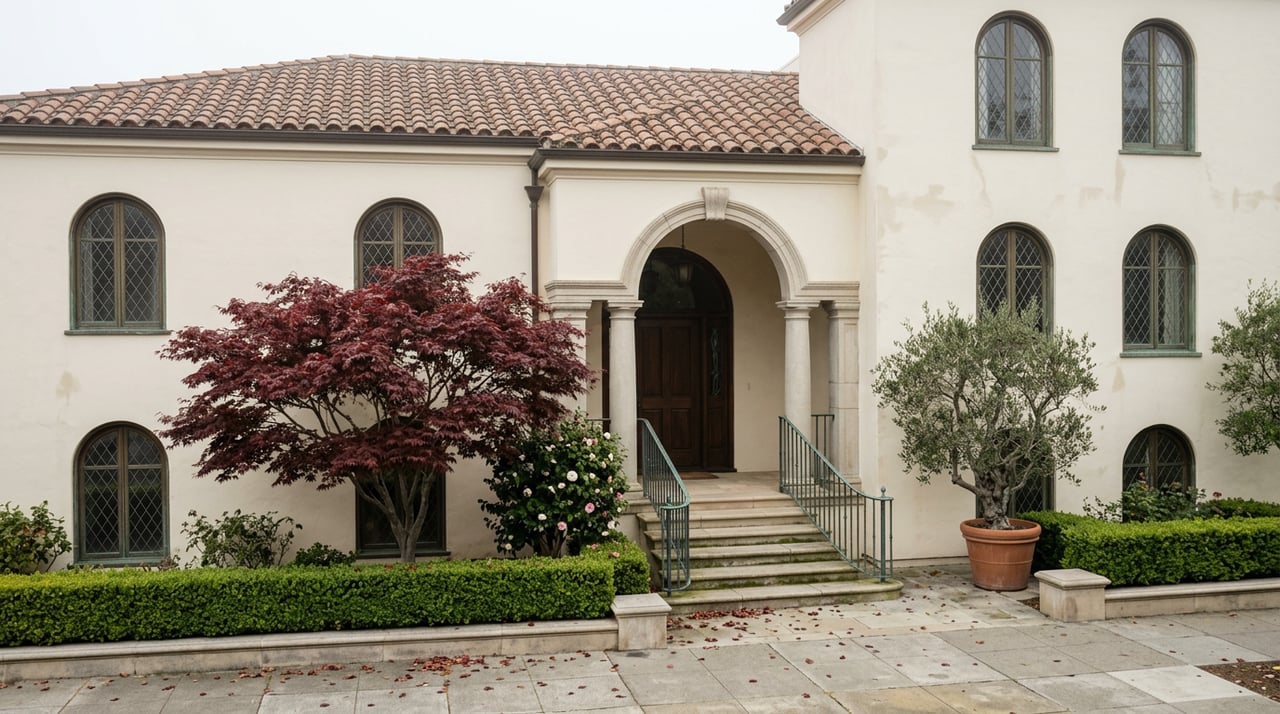
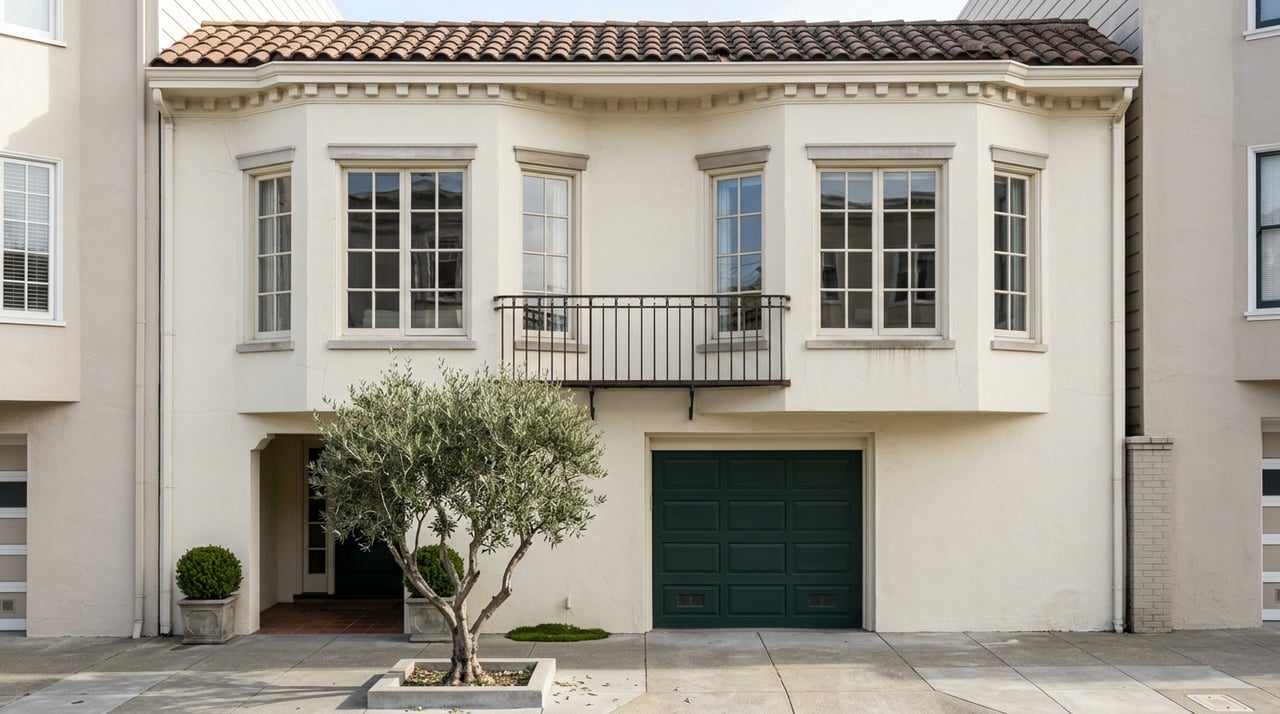
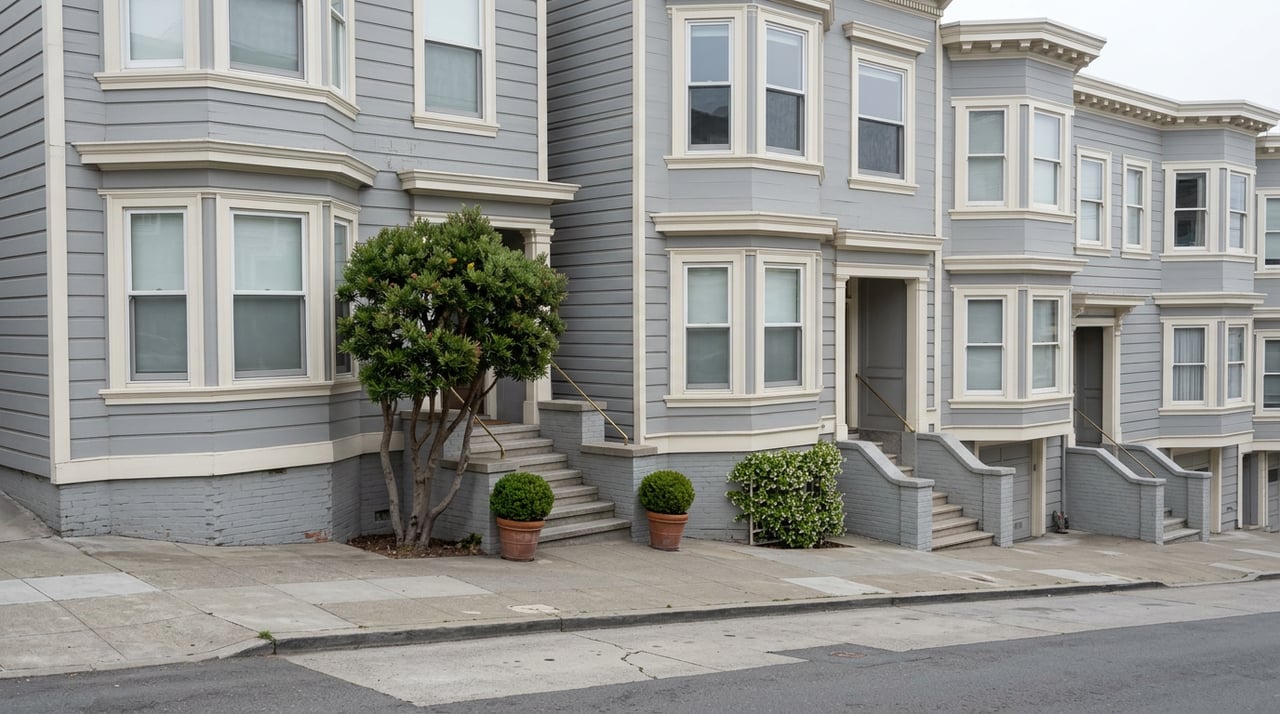
On the west side, you'll find a higher concentration of single-family homes and low-rise multi-unit buildings — often old Victorians converted into two- or three-unit buildings, or three- to four-story buildings with condos or apartments. You're not really going to find larger mid-rise buildings west of Fillmore.
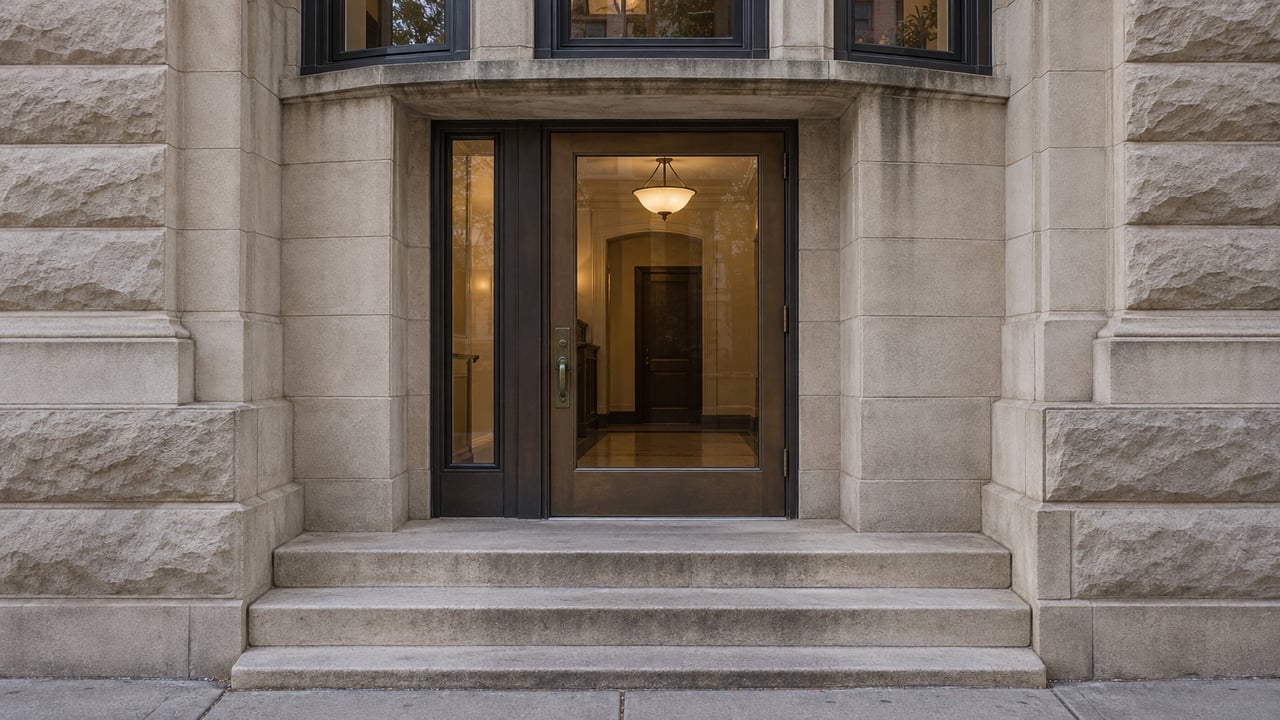
On the east side, you'll still find plenty of large, beautiful, historic single-family homes, but on top of that there's a significantly greater concentration of 5-to-10-story buildings and much larger multi-family housing complexes.
● Modern amenity buildings: Buildings like The Pacific, a block east of Fillmore off Webster and Sacramento, offer a gorgeous, super-modern amenity building experience.
● Historic pre-war buildings: Co-op and condo buildings on the east side can rise 10 to 12 stories, ranging from full-floor luxury units to more common multi-unit-per-floor buildings, often with amenities like a gym, rooftop, garden space, or an attended lobby for added security.
If you want an amenity building, an attended lobby, distance from street level, or a stronger sense of community with more neighbors around you, focus your search on the eastern span. If you want a larger lot, a historic single-family home, or a smaller building with just one or two other owners, the western span is likely the better fit.
Difference 2: Traffic
Traffic is noticeably heavier on the eastern span of Pacific Heights than the western span. The main transit corridor on the west side is Divisadero Street — commonly used by people traveling into the city from the north across the Golden Gate Bridge, and by central-city residents commuting north into Marin. Aside from Divisadero, there aren't many major transit streets on the west side.
The east side, by contrast, has several — Gough Street, Franklin Street, and Van Ness Avenue — and each is more heavily trafficked than Divisadero. Franklin is a one-way street with mostly traffic lights, so cars move faster and it's noisier; Divisadero in Pacific Heights is all stop signs, which keeps speeds down. Gough is partly one-way, partly two-way with a mix of stop signs and lights. Van Ness is by far the largest and busiest, one of the biggest transit corridors not just in the area but in the entire city. The east side is also home to the neighborhood's main hospital — a great amenity, but one that adds meaningful traffic to the surrounding streets.
If you want a quieter part of Pacific Heights that's better suited to quiet walks, walking your pets, and jogging, the western span is the better option. The eastern span is still beautiful, with peaceful pockets and gorgeous park space, but on average it tends to be busier and noisier than the west.
Difference 3: Amenities
On the eastern side, the main park space is Lafayette Park — an absolutely beautiful park surrounded by some of the coolest homes in the city, including the historic Spreckels Mansion, along with some of the most desirable pre-war buildings around. It has tennis courts, children's play areas, and plenty of open green space.
The west side has a comparable park in Alta Plaza Park, a terraced park also surrounded by historic homes, with tennis courts, a children's play area, and basketball courts. In my view, it's actually the better park of the two, because it has better views — with fewer mid-rise and high-rise buildings on the west side, your sightlines from Alta Plaza are less obstructed, making it the better spot for a picnic with truly great views.
The west side also borders the Presidio, one of the true gems of the city — a national park just west of Lyon Street with its own golf course, walking trails, picnic areas, tennis courts, baseball fields, and stunning views of the bay and the city. It's one of the most beautiful parks in San Francisco, and it's walking distance if you live on the west side of Pacific Heights.
On shopping, both sides have easy access to Fillmore Street, with its great variety of higher-end clothing, home goods, restaurants, and bars. But west-side residents also have access to Sacramento Street's interior-design and home-goods stores, plus Michelin-level food, along with a concentration of interior design and architecture studios worth exploring if you're planning a home renovation.
One clear benefit of the east side is proximity to downtown. It's meaningfully closer — not quite walking distance, but roughly a 30-minute walk versus 40 minutes from the west side, and a pretty easy, sub-10-minute drive, which matters if you're commuting into an office a few days a week.
Difference 4: Home Prices
As a general matter, the farther west and north you get in Pacific Heights, the more expensive single-family homes tend to trend — so homes on the western span tend to run more than the east side.
● Single-family homes: Over the past year, west-side single-family homes have sold, on average, for just shy of $1,600/sq ft, about $7.4 million. East-side single-family homes have sold for about $1,200/sq ft, just shy of $5 million — the gap largely reflects the west side's quieter streets and better views.
● Condos: The trend flips for condos, since the high-rise and amenity buildings — which command a premium over smaller, non-amenity buildings — are concentrated on the east side. West-side condos have sold for about $1,160/sq ft, roughly $1.75 million on average; east-side condos have sold for about $1,240/sq ft, roughly $1.95 million.
● Top-tier co-ops: The most expensive co-op units in the neighborhood are also on the east side, sometimes selling north of $3,000/sq ft. One unit currently on the market is priced at nearly $5,000/sq ft — a full-floor, 360-degree view of the entire city that you simply can't find on the west side of Pacific Heights.
So Which Side Is Better?
Those are the core differences between east and west Pacific Heights. Which side is better for you obviously depends on your particular lifestyle and priorities.
Personally, I prefer a quieter, less dense area, closer to parks and with more food options nearby — and with a partner who works in Marin, the west side also makes for an easier commute. So for me, the west side wins out. But someone else might well prefer the east side, and there are plenty of amazing places to live there too.
If you're thinking about buying or selling a home in Pacific Heights, or want to learn more about how the market has shifted in light of citywide dynamics, I'm happy to help. I've helped several clients relocate to and from the area and would be glad to be a resource for you — no pressure, no obligation.
Frequently Asked Questions
Where is the dividing line between East and West Pacific Heights?
Fillmore Street, the neighborhood's main commercial corridor, is the natural dividing line. Everything east of Fillmore is considered East Pacific Heights, and everything west of Fillmore is West Pacific Heights.
Which side of Pacific Heights has better home prices?
It depends on the property type. West-side single-family homes are more expensive on average (about $1,600/sq ft versus $1,200/sq ft on the east side), while east-side condos and co-ops command higher prices per square foot, with the neighborhood's most expensive co-op units concentrated on the east side.
Which side of Pacific Heights is quieter?
The west side is generally quieter, with lighter traffic and fewer major transit corridors. The east side carries heavier traffic along Gough Street, Franklin Street, and Van Ness Avenue, and is also home to the neighborhood's main hospital.
Which side of Pacific Heights is closer to downtown San Francisco?
The east side is closer to downtown — roughly a 30-minute walk or a sub-10-minute drive, compared to about a 40-minute walk from the west side.
Does Pacific Heights have access to the Presidio?
Yes, but access is much more direct from the west side, which borders the Presidio just west of Lyon Street. The east side relies primarily on Lafayette Park for green space.
Which side of Pacific Heights has better parks?
Both sides have excellent parks — Lafayette Park on the east side and Alta Plaza Park on the west side — but Alta Plaza generally offers better, less obstructed views because there are fewer mid-rise and high-rise buildings nearby.
If you're weighing East versus West Pacific Heights for your own move, or want a deeper look at the neighborhood as a whole, I've got additional content covering the pros and cons of living here after nearly four years, plus a full walking tour of the western span where I live. Reach out any time — I've helped people relocate to San Francisco from all over the country and would be happy to do the same for you.