5 New San Francisco Housing Laws Reshaping the Market in 2026
Quick answer: San Francisco is in the middle of one of the most consequential stretches of housing policy change in its history. Five laws and proposals stand out: a Board of Supervisors proposal to cut affordable-housing requirements on new construction, the BUILD Act's rollback of the 2020 transfer tax hike on high-value sales, a new all-electric mandate for major renovations, the Family Zoning Plan's upzoning of the city's western and northern neighborhoods, and an accelerated historic landmark designation program running alongside it. Depending on what you own, rent, or plan to build, these changes could be very good news, very bad news, or both at once.
San Francisco is trying, harder than it has in decades, to solve a self-inflicted housing crisis that's been building for fifty years, while also addressing the environmental impact of its aging building stock. Here are the five laws worth understanding right now, whether you own property, rent, or are thinking about buying.
Is San Francisco Cutting Affordable Housing Requirements?
San Francisco's Inclusionary Affordable Housing Requirement has been in effect for decades. Depending on size, new residential projects have to either set aside a percentage of units as below-market-rate or pay an in-lieu fee into a city affordable housing fund. The concept is reasonable on its face, but in practice it's been a major drag on new construction.
At its peak, San Francisco required developers to set aside up to about a third of new units as affordable housing. In a city where construction costs and permitting times are already among the highest in the country, and interest rates have sat near 7% for years, that mandate has made the math not work for a lot of projects. Between 2020 and 2025, the entire inclusionary program produced fewer than 770 affordable units citywide, in a city under a state mandate to permit at least 45,000 subsidized units by 2031, and that 767-unit total drew more than 34,000 applicants.
Former Mayor Breed lowered the requirement to a range of 12% to 22%, down from 22% to 33%, but new home permitting still stayed low: just 1,031 units in 2024 and 1,900 in 2025.
The New Proposal
In May 2026, the Inclusionary Housing Technical Advisory Committee proposed cutting the requirement further, from 15% down to 5% for new projects with at least 25 units, a two-thirds reduction. If the cut isn't approved, rates are set to revert later this year to 18% for new rentals and 20% for new condos.
● Why it matters: when rules make building too expensive, fewer projects get started, which constrains supply and keeps prices elevated for everyone, including the lower-income residents the requirement was designed to help.
What Is the BUILD Act and the Transfer Tax Walkback?
This one targets Proposition I, which San Francisco voters approved in 2020. Prop I doubled the real property transfer tax on sales of $10 million or more. Before Prop I, a sale between $10 million and $25 million was taxed around 2.75%; after, it jumped to 5%. On sales over $25 million, the rate went from 3% to 6%.
● In dollar terms: on a $25 million sale, the seller now pays roughly $1.3 million in transfer tax, versus about $687,000 before Prop I, adding roughly $600,000 to a single transaction.
It's easy to assume this only affects very wealthy sellers, but the bigger impact falls on developers and investors who build and sell multifamily housing. Developers typically build a project, stabilize it by leasing it up, and then sell to a long-term investment operator, and that exit sale is exactly the kind of transaction now taxed at these elevated rates. When the exit gets more expensive, it eats into development economics from the start, since developers and lenders model required returns before they ever break ground. For individual owners, it's a direct hit to net proceeds, which can discourage selling and further tighten inventory.
The Fix in Motion
The city's own Office of Economic and Workforce Development has acknowledged that San Francisco's transfer tax rates are among the highest in the country and have been stifling investment. In February 2026, Mayor Lurie and Supervisor Mahmood introduced the BUILD Act, the Balanced Update to Incentivize Local Development, which would roll the transfer tax back to pre-2020 levels, cutting the rate in half on transactions over $10 million. Lurie's administration estimates this would save developers about $32,000 per housing unit on multifamily projects and could unlock thousands of stalled units citywide.
What Is San Francisco's All-Electric Renovation Ordinance?
This law isn't about housing supply, but it's one every buyer and homeowner planning a major renovation needs on their radar. San Francisco already banned natural gas in new construction starting in June 2021: no gas furnaces, water heaters, or stoves in any new residential building.
The All-Electric Major Renovations Ordinance, approved by the Board of Supervisors last year, extends that ban to existing buildings undergoing what the city defines as a major renovation, meaning you're replacing or substantially modifying structural, mechanical, electrical, or plumbing systems. Once triggered, the entire project has to meet the all-electric standard, even if the building has run on gas its whole life.
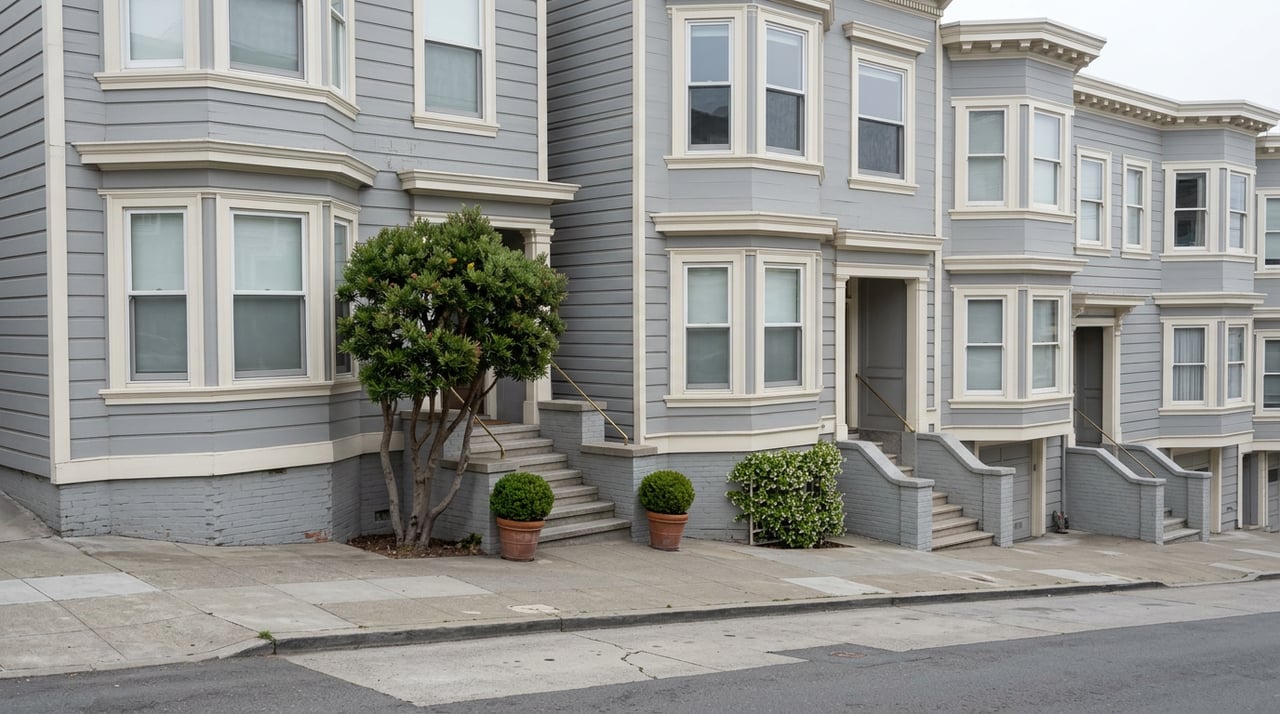
That matters enormously given how much of San Francisco's housing stock is older Victorian, Edwardian, and mid-century construction, most of it on natural gas. A significant gut renovation now has to factor in the full cost of electrical conversion: new electrical panels, often requiring a complete service upgrade, heat pump HVAC systems, electric or heat pump water heaters, and induction cooktops. That can add tens if not hundreds of thousands of dollars to a renovation budget, and it's an even bigger challenge for owners of older multi-unit buildings, where those costs are hard to recover under rent control, with allowable annual increases currently capped at 1.4%.
What Is the Family Zoning Plan?
In December 2025, San Francisco passed the Family Zoning Plan, its biggest rezoning effort in over four decades, in response to a California mandate requiring the city to plan for more than 82,000 new housing units by 2031. Under prior zoning, the city could only accommodate about 58,000, so it had to upzone or risk losing hundreds of millions in state funding and triggering the builder's remedy, which would strip the city of its ability to enforce its own height and density rules.
The plan targets the western and northern parts of the city, neighborhoods like the Sunset, the Richmond, West Portal, and the Marina, that have been zoned for single-family or low-density housing for decades. Many of those lots can now accommodate two or three units, and height limits along major transit corridors like Geary, Mission, and Ocean Avenue are rising, in some cases from 40 feet to 65 or even 85 feet.
A Plan Under Fire From Both Sides
Pro-housing groups, including YIMBY Law, have sued the city, arguing the plan doesn't deliver the upzoning the state actually requires. The city's own economist projected the plan would produce only about 14,600 new units over the next 20 years in the best case, less than half the state mandate and over four times the required timeframe. Neighborhood groups and tenant advocates have also sued, from the opposite direction, arguing the plan could displace residents and damage historic buildings.
For owners in affected neighborhoods, the honest answer on what this means for property values right now is uncertainty. Zoning has technically changed to allow more use of the land, but the lawsuits and practical constraints on development mean it's not yet clear what the upzoning means in practice for any given parcel. A dramatic wave of new construction that pushes prices down citywide seems unlikely, but the plan is likely to have a real effect on what gets built along the city's main transit corridors.
What Is San Francisco's Landmark Designation Program?
The final piece runs in parallel to the Family Zoning Plan and, in practice, works against it. Throughout the debate over rezoning, one of the most consistent complaints from homeowners in the western and northern neighborhoods was that they didn't want their blocks to change character. The response was an accelerated landmark designation program adding historic protections to San Francisco properties faster than the city ever has before.
A designated landmark gets significant protection against demolition and renovation, with any major alteration requiring approval from the Historic Preservation Commission and the Planning Department, adding review, time, and cost, and often making development functionally impossible regardless of the underlying zoning.
● Historical pace: San Francisco typically designates 5 to 10 new landmarks a year, with roughly 318 total buildings designated since the program began in 1967.
● Since the accelerated program launched: 75 properties had been nominated by the end of March 2026 alone.
Housing advocates argue this is effectively a workaround of the Family Zoning Plan. If a property gets landmark status, the state planning rules that would otherwise force San Francisco to allow development on that site simply don't apply, which lets the city claim credit for an ambitious rezoning plan while shielding large parts of the targeted neighborhoods from actual development.
Frequently Asked Questions
Is San Francisco lowering affordable housing requirements?
A May 2026 proposal would cut the inclusionary housing requirement from 15% to 5% for new projects with at least 25 units. If it's not approved, rates are set to revert to 18% for rentals and 20% for condos.
What is the BUILD Act?
A proposal from Mayor Lurie and Supervisor Mahmood to roll San Francisco's real property transfer tax back to pre-2020 levels, cutting the rate in half on sales over $10 million, aimed at unlocking stalled multifamily housing projects.
Do I have to go all-electric if I renovate my San Francisco home?
If your renovation counts as major, meaning you're substantially modifying structural, mechanical, electrical, or plumbing systems, the entire project now has to meet San Francisco's all-electric standard, even in a building that has always run on gas.
What is the San Francisco Family Zoning Plan?
A December 2025 rezoning of the city's western and northern neighborhoods, required by a state housing mandate, that allows two to three units on many lots previously zoned single-family and raises height limits along major transit corridors.
How does landmark designation affect development in San Francisco?
A designated landmark is heavily protected against demolition and major alteration, which can make development functionally impossible on that parcel regardless of what the underlying zoning allows, even in neighborhoods recently upzoned under the Family Zoning Plan.
Reasonable minds can differ on the right approach here, but my view is simple: whatever makes it cheaper and faster to build is worth supporting, because the alternative is what we've had for the past several years, which is not building much of anything. That doesn't help buyers, sellers, or renters.
If you're thinking about buying or selling in San Francisco and want to understand what any of this means for your specific situation, reach out. I've lived in the city for nearly 14 years and have helped numerous people relocate here from all over the country. I was a lawyer at one of the biggest law firms in the world before getting into real estate, and I'm happy to be a resource for you.