Pull up Russian Hill's home prices on three different sites this week and you will land on three different stories. One shows values climbing sharply. Another shows the same neighborhood cooling off. A third shows the total price a buyer paid rising while the price per square foot fell, in the same twelve months, on the same platform. None of these sites made a mistake. Russian Hill is small enough, and different enough from block to block, that its headline price number can say almost anything depending on which handful of sales happened to close that month.
That matters if you are comparing Russian Hill against another San Francisco neighborhood right now. The number you are reading is not a stable measurement of the place. It is a snapshot of whatever mix of buildings, ownership types, and floor plans happened to trade hands in a window narrow enough to fit on one page.
One Address, Three Numbers Moving in Three Directions
Look at Redfin's own reporting on Russian Hill across two points in the same twelve-month stretch. In October 2025, Redfin showed a median sale price of $1.5 million, down 15.5 percent from the year before, with 45 homes sold that month, up from 30 the year before, and a median of 29 days on market compared to 48 days the prior year. By May 2026, the same source showed a median sale price of $1,924,353, up 29.4 percent year over year. That is a swing from a double-digit decline to a near 30 percent gain, on the same platform, within seven months.
Movoto's own numbers tell a stranger version of the same story. In August 2025, Movoto listed a median home price of $1.35 million in Russian Hill, with a median value of $1,055 per square foot. A year later, in August 2026, the median listed price had risen to $1.49 million while the price per square foot had fallen to $873. The total dollar figure went up. The per-square-foot figure went down. Over the exact same year, on the exact same site.
| Source and window | Metric | Reading |
|---|---|---|
| Redfin, October 2025 | Median sale price | $1.5M, down 15.5% YoY |
| Redfin, May 2026 | Median sale price | $1,924,353, up 29.4% YoY |
| Movoto, August 2025 | Median list price / price per sqft | $1.35M / $1,055 |
| Movoto, August 2026 | Median list price / price per sqft | $1.49M / $873 |
None of that is fraud or bad math. It is what happens when a small, architecturally mixed market gets summarized into a single number every month.
The Sample Size Nobody Puts in the Headline
The Redfin figure from October 2025 hands you the piece most sites leave out: 45 homes sold that month. A median built from 45 transactions, or from 30 the year before, moves differently than a median built from a few thousand. One three-bedroom penthouse selling above ask, or two tenancy-in-common units closing below market in the same thirty-day window, can shift the reported center of the market by a meaningful margin without the underlying neighborhood changing at all.
This is why a serious comparison of Russian Hill against another neighborhood should never rest on a single monthly figure. The question worth asking of any stat is not "what is the median," but "how many sales built that median, and what were they."
Same Block, Four Different Ownership Structures
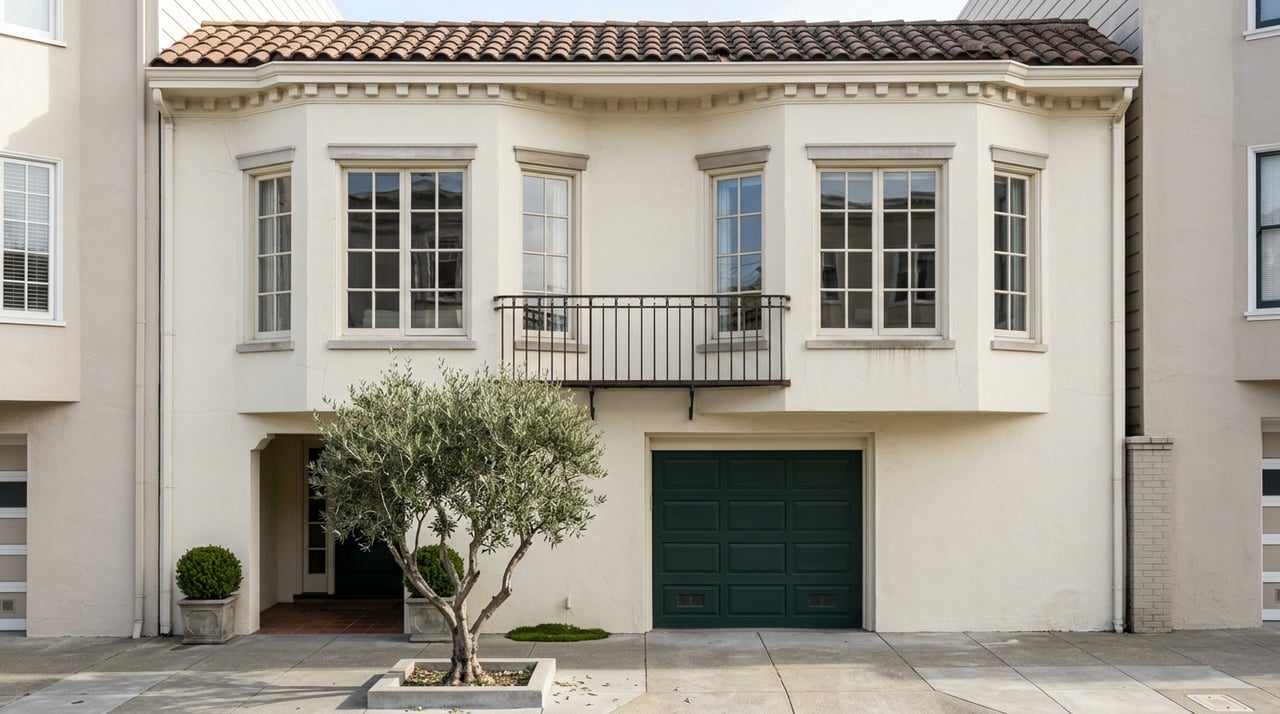
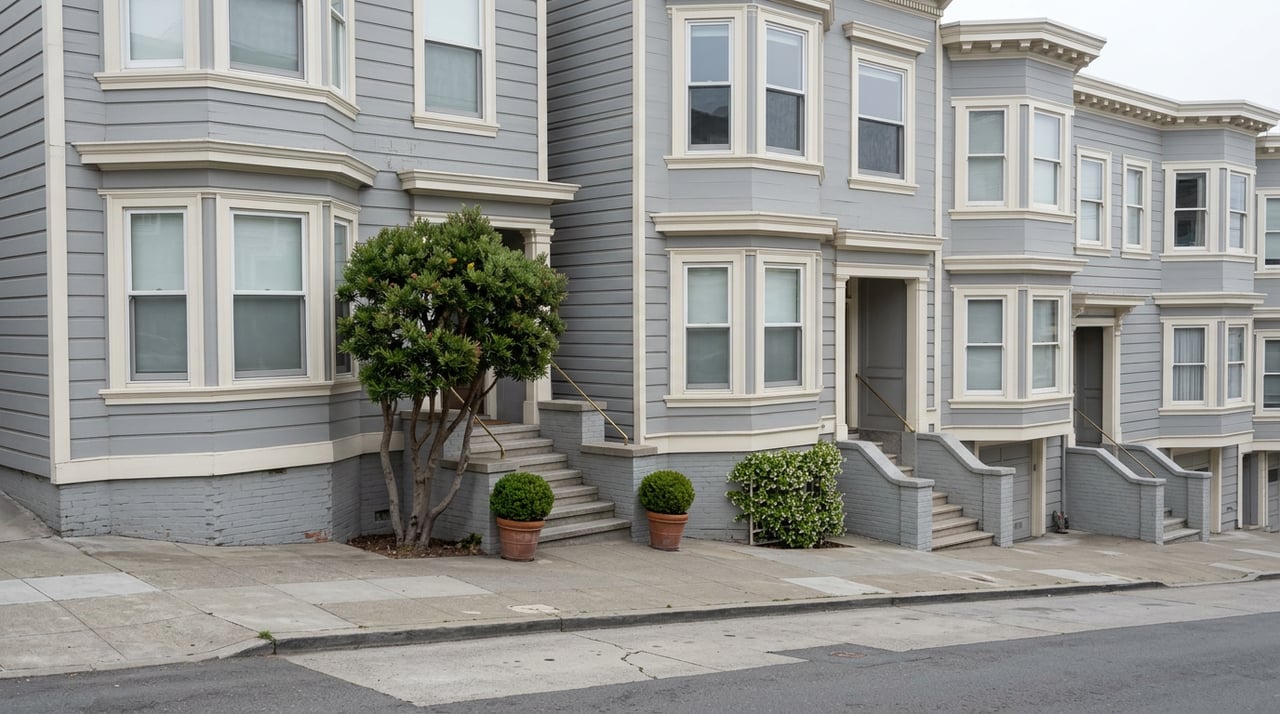
Here is the part that actually catches buyers off guard once they are under contract, not before. Russian Hill's housing stock is not one product. On the same street you can find full-ownership condominiums, cooperative apartments, tenancy-in-common flats, and pre-war single-family Victorians and Edwardians, and each one comes with its own financing path and its own resale math.
A listing at Ghirardelli Square, for example, was marketed as one of the few whole-ownership residences in a building known primarily for fractional and hotel use, a distinction that matters enormously for how a lender treats it. Elsewhere in the neighborhood, a unit at a smaller building like Union House trades as a straightforward condominium with conventional financing, while a flat in one of Russian Hill's many pre-war two-to-six-unit buildings might be structured as a tenancy in common, where the buyer owns a percentage of the whole building rather than a deeded unit.
That distinction changes the transaction in practical ways. Condominium buyers have access to the widest range of conventional and jumbo financing. Cooperative buyers are financing shares in a corporation and a proprietary lease, which means board approval becomes part of the closing timeline. Tenancy-in-common buyers face the tightest lending box of the three: many national lenders will not underwrite a TIC interest at all, so buyers typically need a portfolio lender that already understands the product, along with a larger down payment and closer scrutiny of the building's reserves. TICs also tend to sell at a discount to comparable condominiums in the same building or block, precisely because the buyer pool and the financing options are smaller.
None of that shows up in a neighborhood median. A month where three TICs close will pull the number down. A month where two full-service elevator units close will pull it up. The neighborhood has not moved. The mix has.
Where the Real Premium Hides
Even within a single ownership type, the number that actually explains price is rarely square footage. It is outlook. A 2026 study of high-rise residential pricing found premiums of roughly 11 percent for a partial view and 22 percent for a full view, holding floor level and building age constant. That research was not conducted in San Francisco, so it should be read as a benchmark rather than a local rule, but it lines up with how Russian Hill listings are actually priced. A unit with a genuine Golden Gate Bridge or Bay outlook from its main living space is not competing on the same curve as a unit one floor down with the same square footage and a wall view.
Building type layers on top of that. Russian Hill's terrain is steep enough that a corner two blocks from a park can sit roughly 200 feet higher in elevation than the corner it is compared against, which is part of why elevator access, not just square footage, becomes a real pricing variable. A four-story walk-up with a spectacular view and no elevator is a genuinely different product from a full-service tower with an elevator and a lobby attendant, even if both get filed under the same neighborhood name on a portal.
The Diligence Question Pre-War Building Buyers Skip
Because so much of Russian Hill's tenancy-in-common and cooperative stock is pre-war, seismic status deserves a real look before anyone gets attached to a number. San Francisco's Mandatory Seismic Retrofit Program covers wood-frame buildings of two or more stories over a soft, weak, or open ground floor, with five or more residential units, built before January 1, 1978. Every compliance deadline under that program has already passed, as of September 15, 2021, which means any covered building that has not completed its retrofit is currently out of compliance and subject to Department of Building Inspection enforcement, including an earthquake warning placard on the building itself. Smaller buildings with four or fewer units fall under a separate, voluntary incentive program rather than the mandatory one, so the retrofit status question is worth asking regardless of building size.
For a buyer comparing a TIC's below-market price against a nearby condo's higher one, this is where the actual homework lives. Ask for the retrofit history, not just the price per square foot.
What This Means If You're Comparing Neighborhoods
If you are using Russian Hill's median price as a data point in a larger decision, treat it the way you would treat a single poll result rather than an election outcome. Ask how many sales built the number. Ask what ownership types were in that sample. Ask whether the comparable you are looking at is a condo, a co-op, or a TIC, because comparing across those categories without adjusting for financing and resale liquidity is not really a comparison at all.
The more useful exercise is building-level, not neighborhood-level. What did comparable units sell for in this specific building, under this specific ownership structure, with this specific view, in the last several months, not the last calendar year.
Before You Compare Any Two Numbers
Does a lower price per square foot always mean a better deal in Russian Hill? Not on its own. A lower per-square-foot figure can reflect a larger unit, a weaker view, a walk-up building, or a TIC discount tied to financing limits rather than an actual bargain. Check the ownership type and the outlook before assuming the number reflects value.
Are tenancy-in-common units a cheaper way into Russian Hill? Often, yes, but the discount exists because financing is more specialized and the buyer pool is smaller. That is a real tradeoff, not free money, and it is worth working through with a lender who already finances TICs in San Francisco before assuming the math works the same way a condo purchase would.
Why do days-on-market figures for Russian Hill vary so widely between sites? For the same reason the median does. With roughly 30 to 45 closed sales in a typical month, a few unusually fast or unusually slow transactions swing the reported average in either direction. Treat any single days-on-market figure as a range, not a rule.
Russian Hill rewards buyers and sellers who read the building, not just the block. If you are trying to figure out what a specific property, or a specific ownership structure, is actually worth in this market right now, Austin Klar brings a legal and finance background to exactly this kind of transaction, the ones where the headline number and the real answer are not the same thing. Work with Austin before you price against a median that may not be measuring what you think it is.