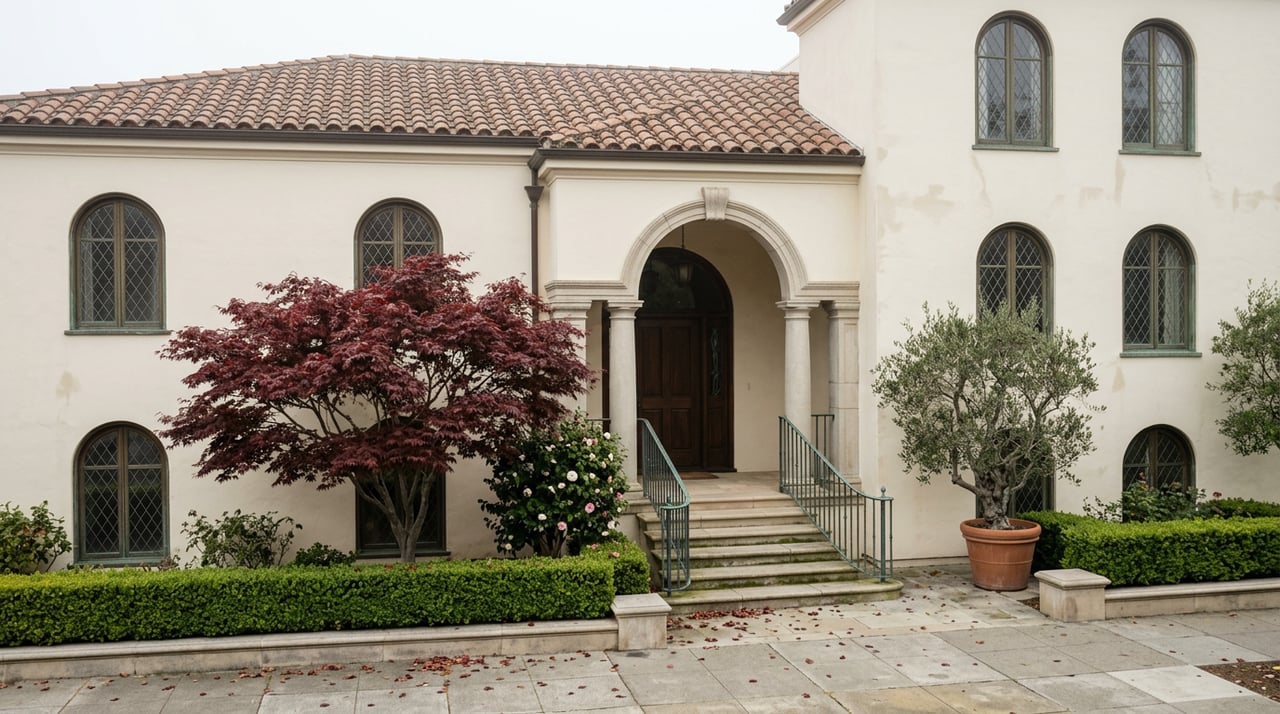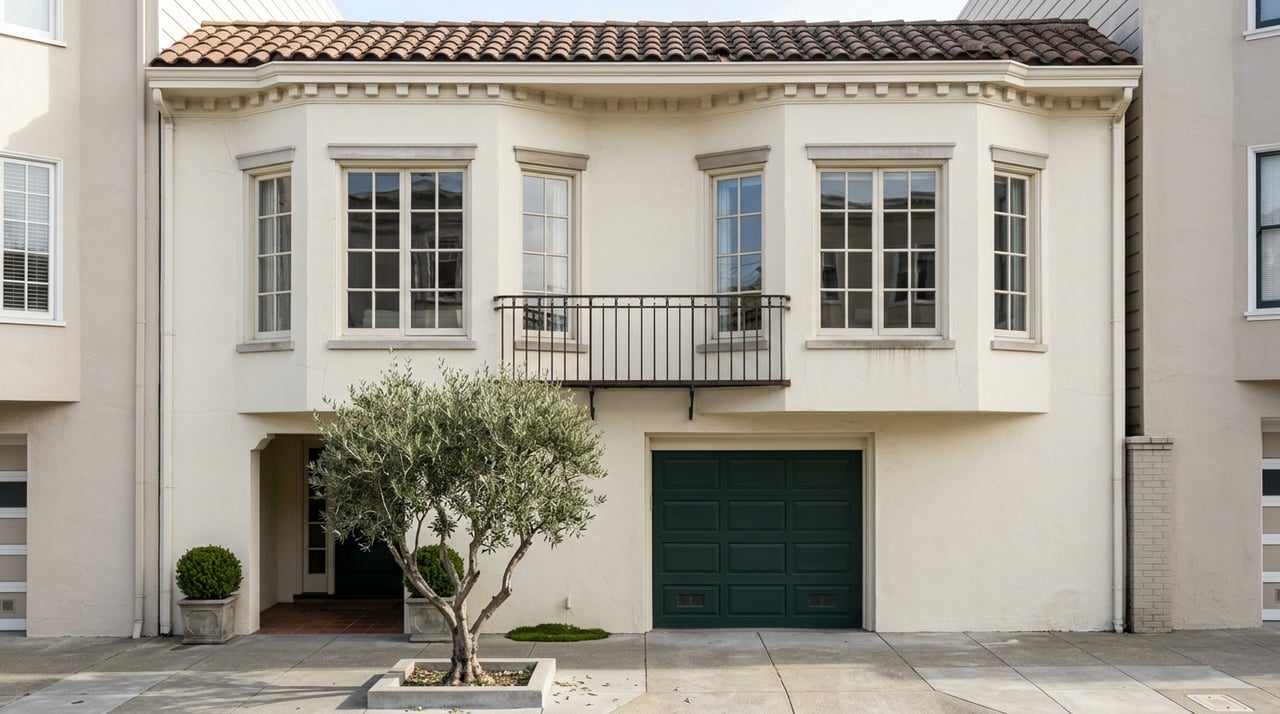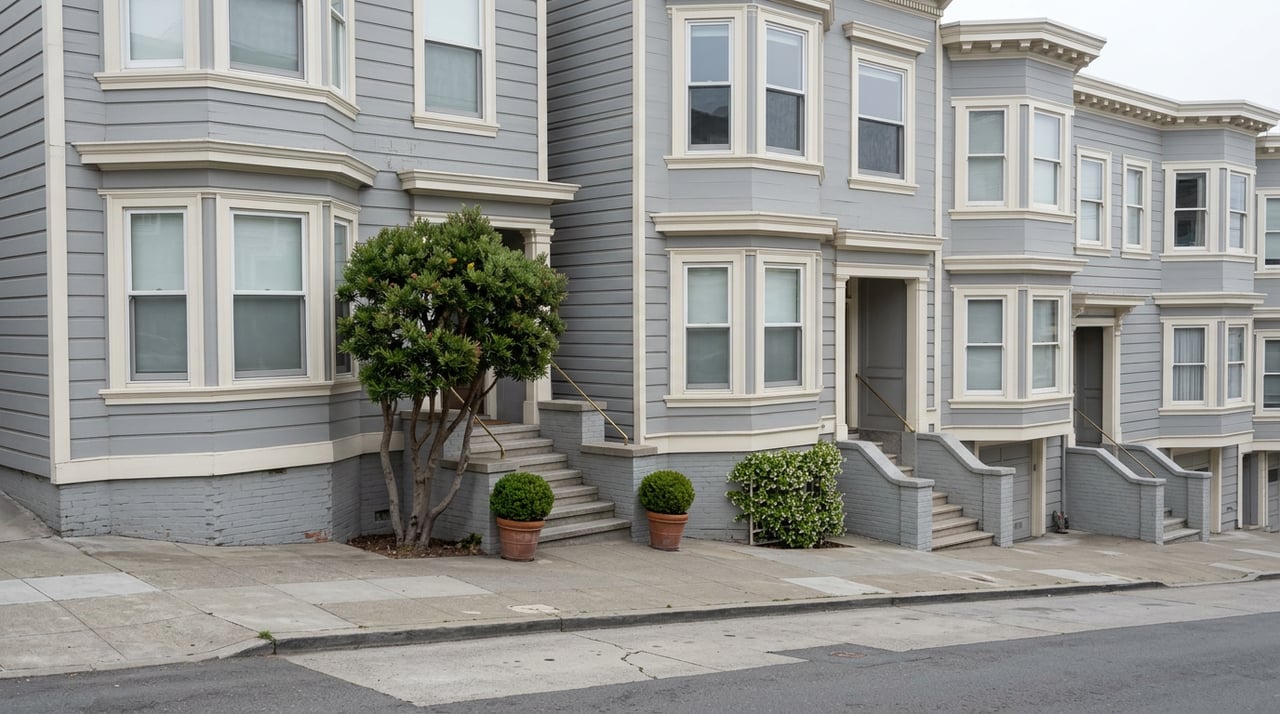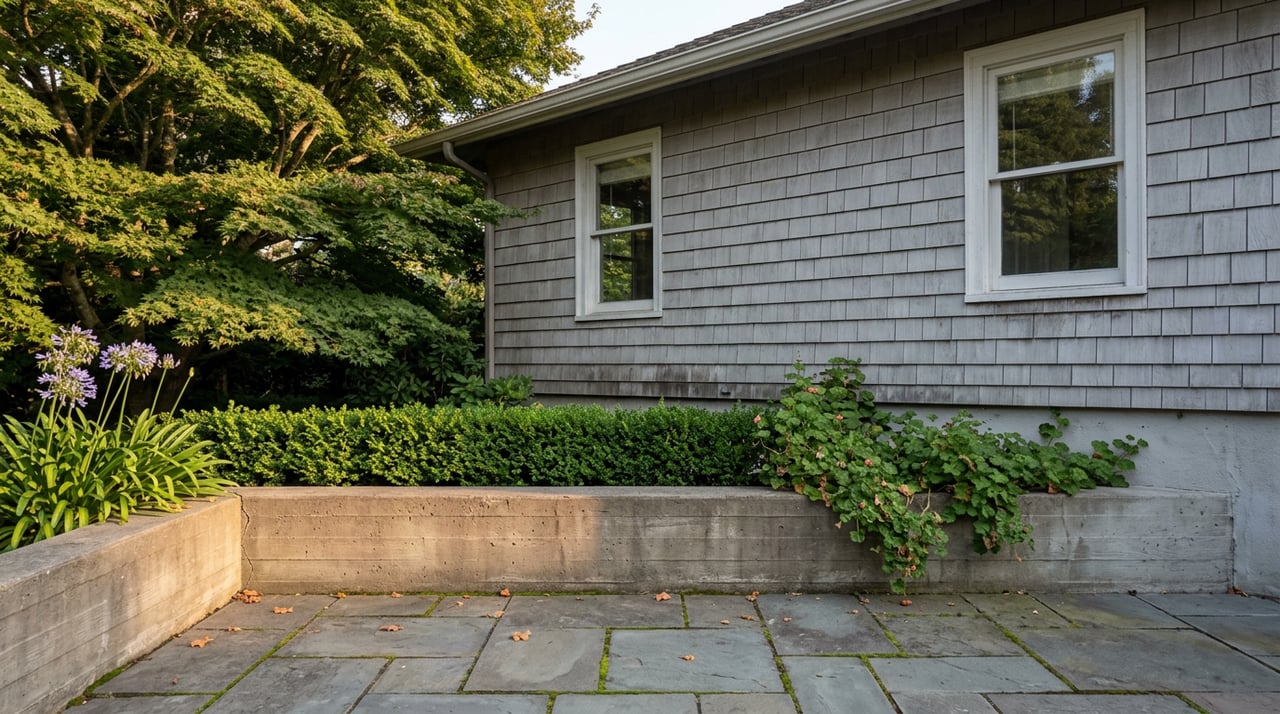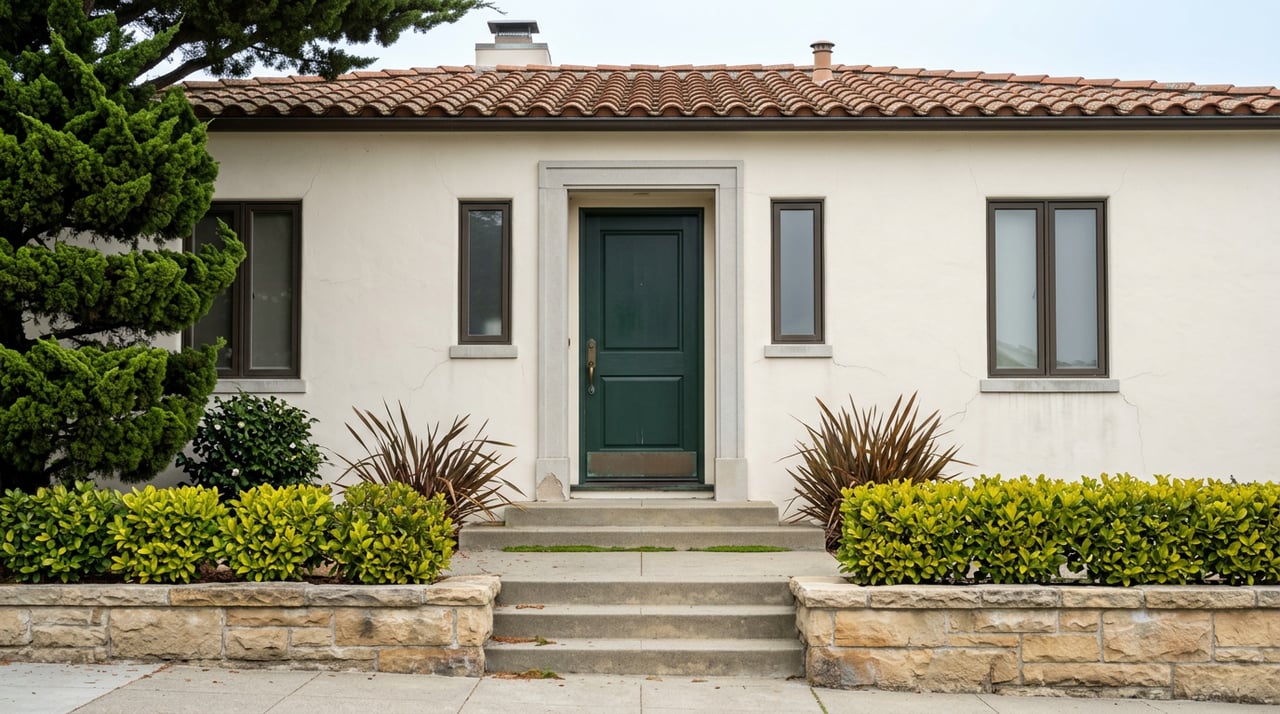
In late June, a house on El Camino del Mar that had not been meaningfully updated in decades sold for $20 million. That works out to $4,574 a square foot, a citywide record confirmed by Compass chief economist Mike Simonsen, who noted that only a handful of condo sales at 181 Fremont Street had come close, and those topped out around $4,400 a square foot. The buyer, Michael Henderson, is the CEO of Apogee Therapeutics, a biotech that AbbVie had just acquired for $10.9 billion. The sellers, gastroenterologists Daniel Conlin and Robert Elsen, had bought the 1938 property for $5.4 million back in 2010.
That same June, the single biggest sale in San Francisco did not happen in Sea Cliff at all. It happened at 2880 Vallejo Street, where a fully renovated 7,500 square foot home, complete with a car-turntable garage and a built-in cold plunge in the backyard, closed at $26.5 million. Two record-setting sales, three weeks apart, and they reward completely different things. The Vallejo Street buyer paid top dollar for finish work and square footage. The El Camino del Mar buyer paid a record rate for square footage nobody had touched in years, and paid it happily, because in Sea Cliff the finish work was never really what the money was chasing.
The Land Is Doing Most Of The Work
Alexander Lurie of City Real Estate put it plainly when the sale closed: "In Sea Cliff, a premium lot commands a premium, good condition or bad." His reasoning is simple enough to state in one sentence.
"You can renovate a house. You can't manufacture the land it sits on."
That is not a sales pitch. It is a fair description of the assessor data. On a majority of Sea Cliff parcels, the land itself is worth more than whatever building sits on top of it. The typical lot runs around 4,000 square feet, and the typical house on it is just over 3,000 square feet, on a lot in a neighborhood where nearly nine out of ten homes were built before 1950 and the median year built lands around 1922. The house on El Camino del Mar was not an outlier. It was closer to the median.
That is also why the Robin Williams estate, an approximately 10,600 square foot 1920s villa on the same street, closed for $18.1 million in January 2025 without needing to be a showcase of modern finishes. The buyers in these deals are underwriting a fixed, permanent asset (the lot, the elevation, the unobstructed line to the Golden Gate Bridge and the Marin Headlands) and treating the structure as something they can deal with later, or not at all.
Why So Few Owners Ever Test This
If the land is worth this much, you would expect a steady stream of owners cashing out. Instead, the opposite happens. The typical Sea Cliff owner has held their property for around 15 years, and more than a third have held for over two decades. Under California's Proposition 13, a sale resets the property's assessed value to current market price, which means a longtime owner who sells and buys anything comparable elsewhere faces a tax bill that did not exist the day before the sale. For a family sitting on a Sea Cliff lot they bought in the 1990s or 2000s, that math argues loudly for staying put.
The result is a neighborhood where inventory barely moves. In March 2026, only four homes sold, down from six the year before, and that thin a sample produces numbers that contradict each other on their face. The median sale price that month was $3.9 million, down 18.6% from the year before, while the median price per square foot was up 87% over the same stretch. Both statements were true at the same time, because four transactions is not a market, it is a coin flip that happened to land on a few very different properties. Anyone reading a single month's median for Sea Cliff and treating it as a trend line is reading noise.
What Similar Money Buys A Few Blocks Away
Because Sea Cliff trades so rarely and the land premium is so specific to its geography, it helps to see what the same dollar bought across nearby luxury pockets. In April 2026, per-square-foot medians across San Francisco's highest-end neighborhoods looked like this:
| Neighborhood | Median $/sq ft, April 2026 |
|---|---|
| Sea Cliff | ~$2,758 |
| Cow Hollow | ~$2,275 |
| Noe Valley | ~$1,988 |
| Pacific Heights | ~$1,950 |
Pacific Heights and Cow Hollow both offer proximity, walkability, and their own architectural pedigree, yet they trade at a real discount to Sea Cliff on a per-square-foot basis. The difference is not finish quality. It is that Sea Cliff's lots come with a view corridor that cannot be replicated a few blocks inland, and buyers price that scarcity directly into the land.
What Renovating Actually Buys You
If you are picturing a gut renovation as the move that unlocks a Sea Cliff lot's full value, it is worth understanding what that process involves. Sea Cliff is one of nine master-planned residence parks in San Francisco, designed under a plan by landscape architect Mark Daniels, and that history is not just trivia. Under San Francisco's Residential Design Guidelines, any project in an R-District, including most of Sea Cliff, has to be reviewed under Planning Code Section 311, and new construction or a vertical addition gets routed to the Residential Design Advisory Team for a compatibility review. The guidelines exist to keep a single house from breaking the visual rhythm of the block.
That review process is not a rejection of ambitious renovation. Architects have delivered full modern reworkings on Sea Cliff lots, from structural glass staircases to seismic upgrades and excavated lower levels. But it does mean the massing, the scale, and the street-facing character of a Sea Cliff house are constrained by design well beyond what a buyer might assume from touring the interior. You can update the kitchen, replace the windows, and dig out the basement. You are working within limits designed to protect exactly the neighborhood cohesion that makes the land valuable in the first place. Lurie's line about not being able to manufacture land turns out to describe the house almost as much as the lot underneath it.
What Happens When A Seller Prices The House Instead Of The Lot
The flip side of this dynamic shows up clearly in how the market punishes a wrong price. Of Sea Cliff sales tracked through mid-2026, only a small share needed a price cut, but the ones that did settled at a median of roughly 23.7% below their original ask and took about 84 days to sell. Listings that held their price closed around 3% over ask in about 24 days. That is not a small gap. It is the market telling a seller, in blunt terms, that they priced the house and the buyers were only ever paying for the lot.
The acceleration at the top of the market backs this up. In the three months leading into June 2026, the median closing price for Sea Cliff sales reached $6.252 million, compared with $4.525 million across the prior three years, and 60% of those recent sales closed above their original asking price. One example: a house at 238 28th Avenue listed for $5.498 million and closed at $6.252 million, 13.7% over ask, in 30 days. Buyers are not haggling over cosmetic details on these deals. They are competing for a specific elevation, a specific sightline, and they will pay past the ask to get it.
Baseline home values across the neighborhood sit around $4.4 million as of mid-2026, up nearly 8% year over year, which is a reasonable floor. The trophy sales sit well above that floor, and the gap between the two is almost entirely explained by lot quality, not square footage or renovation spend.
The Practical Read
If you are shopping in Sea Cliff, the condition of the kitchen tells you less than the elevation of the lot and the angle of the view corridor. Two houses with identical square footage can be worlds apart in price if one has an unobstructed line to the bridge and the other does not, regardless of which one has the newer bathrooms.
If you are selling, the lesson cuts the other way. A recent renovation is worth mentioning, but it will not rescue a price built around the wrong comparable. The buyers who are willing to go past ask in this neighborhood are underwriting the land, and a listing strategy that leads with the house instead of the lot is the fastest way to end up in that 84-day, 23.7%-off group instead of the 24-day, 3%-over one.
A Few Questions Worth Asking Before You Bid
Does a full renovation ever change the math here? It changes the buyer pool and the speed of a sale, but the ceiling on price is still set by the lot and the view. Any exterior or massing change also has to clear Planning's design review, which limits how far a renovation can go in altering the character that made the lot desirable to begin with.
Why do so few Sea Cliff homes come up for sale? Long ownership tenures, driven largely by Proposition 13's tax reset on sale, keep inventory unusually tight. Owners who have held for fifteen or twenty years face a real financial disincentive to sell and rebuy, even at today's prices.
Can you trust a single month's median price for Sea Cliff? Not on its own. With sales counts as low as four in a given month, one unusual deal can send the median price down while the per-square-foot figure goes up in the same stretch. Treat any single month's headline number as a data point, not a trend.
Sea Cliff rewards buyers and sellers who understand that the transaction is really about the ground the house sits on. If you are trying to figure out what a specific lot is worth, or how to price a listing so it closes in 24 days instead of 84, Austin Klar can walk through the comparables that actually apply to your address. Work with Austin.