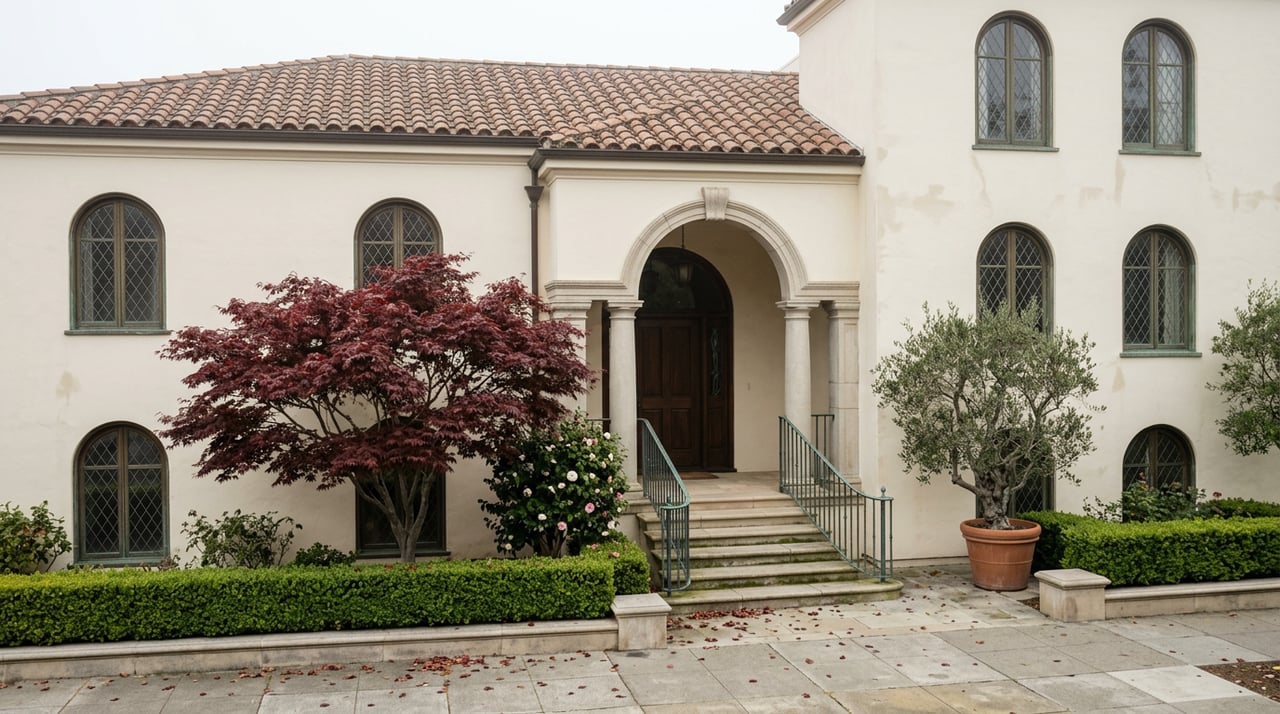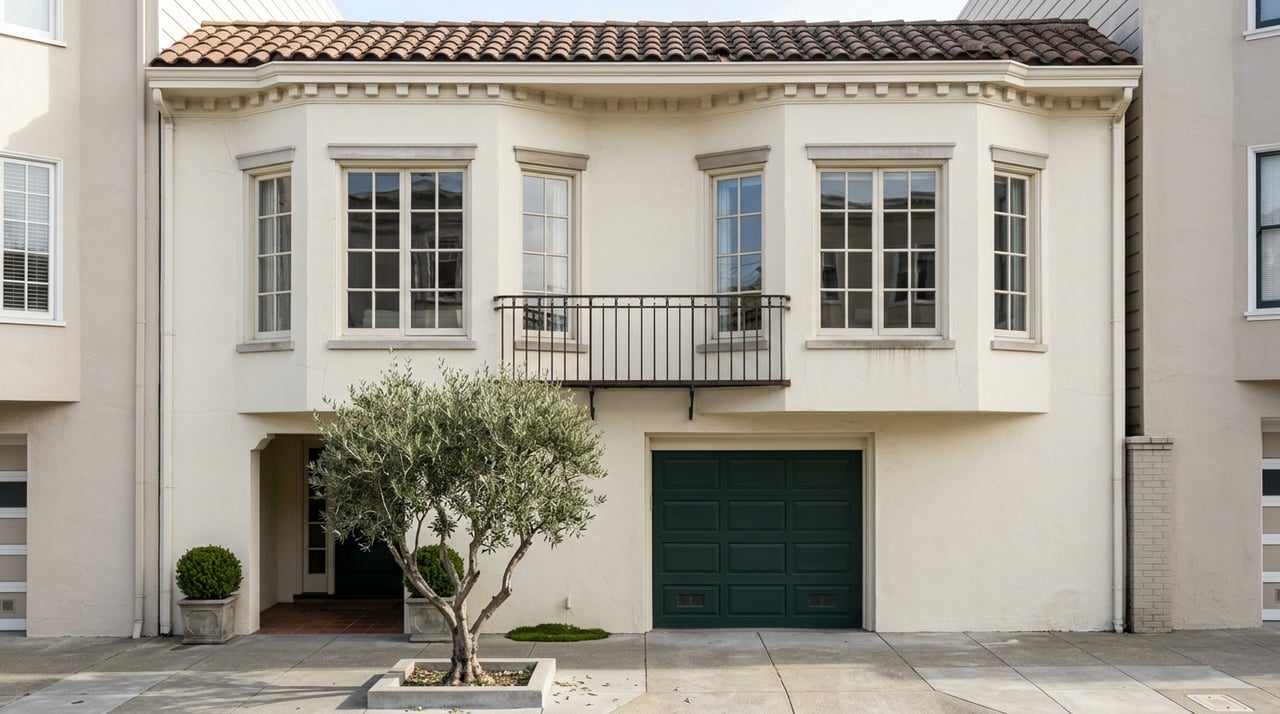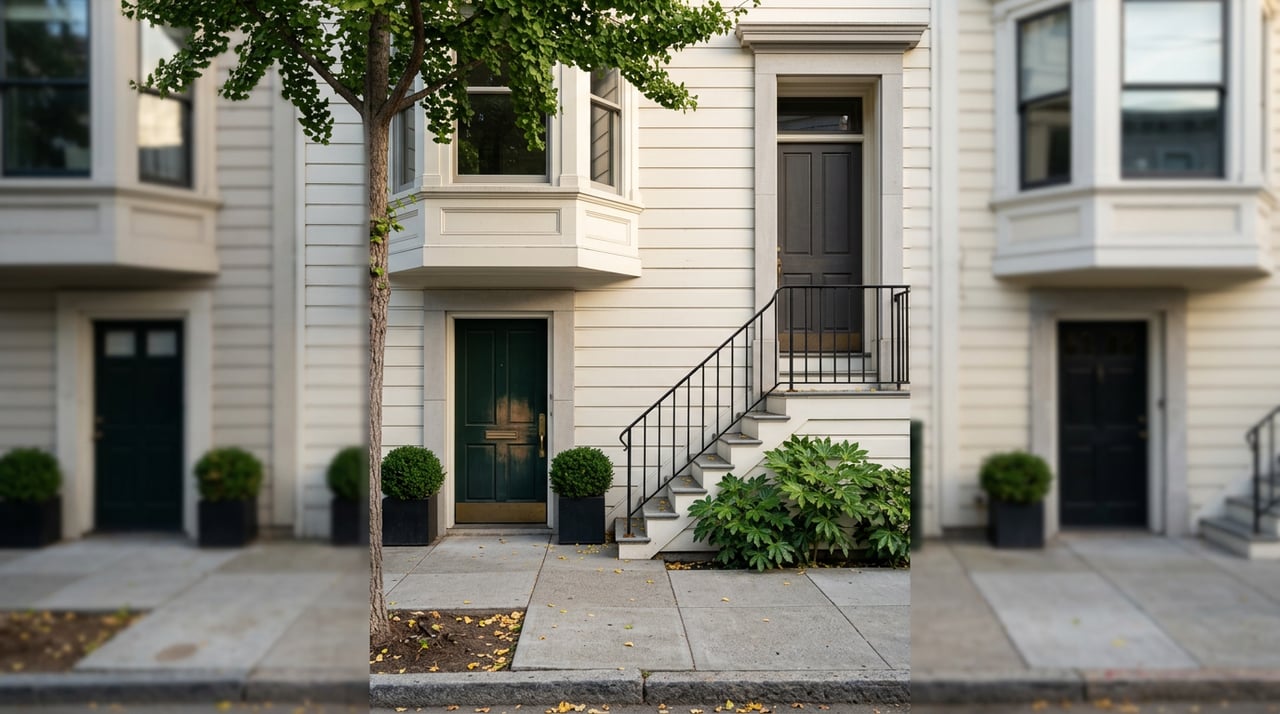
One recent Hayes Valley sale makes the point on its own: a pre-1906 Victorian on Oak Street closed 35 percent over its list price after drawing eleven offers in seven days. A few blocks away, a Tenancy in Common flat with a nearly identical floor plan and finish level could sit for a month and close at a discount to a comparable condo. Both are Hayes Valley. Both would show up in the same "median sale price" pull from any portal search. Neither number tells you anything useful about the other property.
This is the thing about Hayes Valley that trips up sellers who priced their last home in Noe Valley or the Sunset, where the housing stock is mostly one type and comps behave the way comps are supposed to behave. Hayes Valley crams a pre-1906 street-to-street Victorian, a 2010s condo overlooking Patricia's Green, an Edwardian flat that could be recorded as either a condo or a TIC, and a late-1990s live-work loft into the same handful of blocks between Franklin and Laguna. They close in the same MLS dataset, sometimes in the same month, and they price on entirely different logic. A neighborhood average is not a market signal here. It is five markets wearing one name tag.
Same Blocks, Five Different Pricing Rules
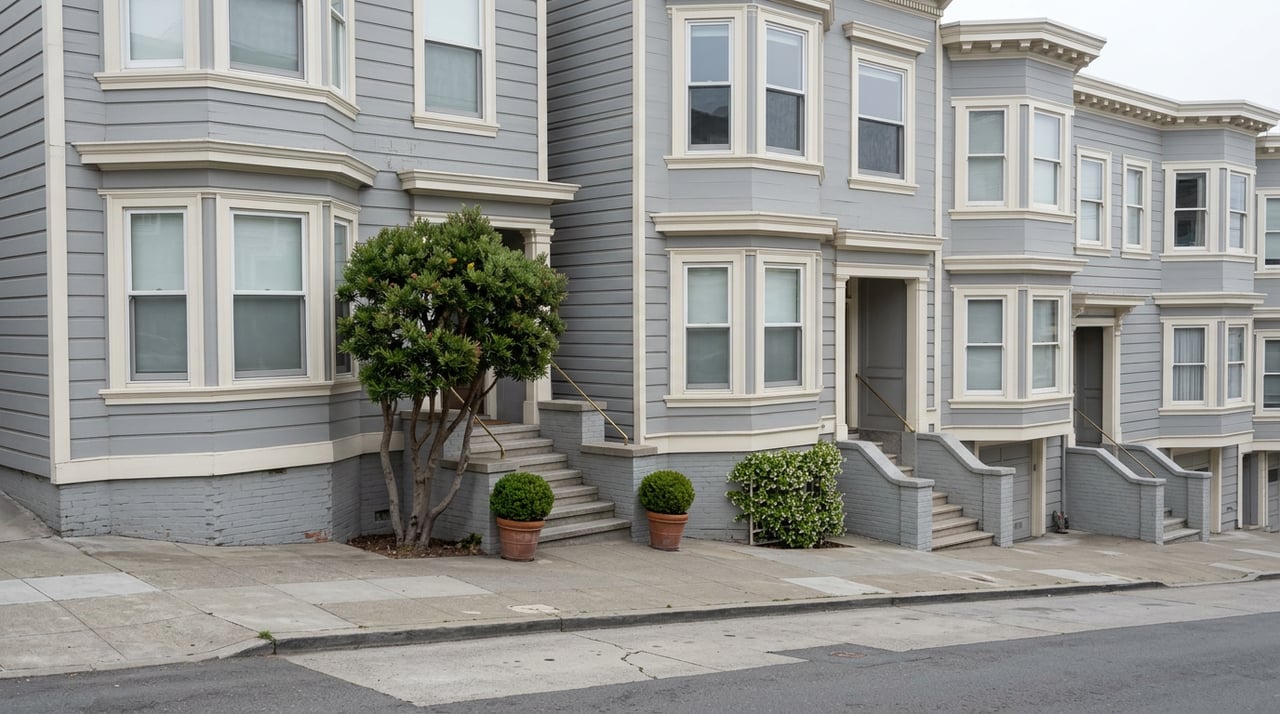
Start with the Victorians on Oak, Fell, Linden, Hickory, and Ivy. The rare ones run street-to-street, meaning the parcel stretches from one street through to the parallel street behind it, often with the main house facing one side and a secured garage facing the other. That parcel geometry cannot be recreated on a typical San Francisco lot, which is why these properties price on a heritage-and-configuration premium: unit count if it is a multi-unit Victorian, parking, the street-to-street footprint itself, and how much original architectural detail survived a century of remodels. A single-family Victorian without the multi-unit angle prices on the heritage premium alone, without the multiplier that comes from additional rentable units.
A Patricia's Green condo is a different animal entirely. Nobody is paying for the year the building was constructed. They are paying for which floor, which exposure, whether there is private outdoor space, what the HOA dues and reserves look like, and whether parking comes with the unit. Two units in the same building, one floor apart, can have meaningfully different price tags because of light and outlook alone.
An Edwardian flat splits the difference, and this is where sellers get caught. The same flat, with the same layout and the same finishes, prices differently depending on whether it is recorded as a condo or held as a TIC. That single fact, condo or TIC, changes who can buy it, what loan product they can use, and how long it sits on the market before someone writes an offer.
Then there are the live-work lofts from the late 1990s buildout, which price on building age, floor plan, light exposure, and ceiling height, criteria that have almost nothing to do with what makes a Victorian or a Patricia's Green condo valuable. Put these five product types in a blender and you get the range that shows up in Hayes Valley closed sales: listings from the mid five hundred thousands up past three million dollars, all technically comparable by zip code and nothing else.
The takeaway is not that Hayes Valley pricing is chaotic. It is that "comparable" only means something once you know which of the five pricing logics your specific property falls under. A seller who prices a street-to-street Victorian off recent Patricia's Green condo sales, or vice versa, is going to be wrong in a way that costs real money.
The TIC Question Nobody Gets to Skip
If your Hayes Valley property is an Edwardian flat, you cannot get to a listing price without first answering whether it is a condo or a TIC, because the answer determines your buyer pool.
A condo comes with a deed to your specific unit and a share of common areas governed by a homeowners association under California's standard condo statute. That is the version most lenders understand, which means conventional financing, and in some buildings FHA or VA approval, is straightforward.
A TIC means you and the other owners in the building hold fractional interests in the whole property, with your exclusive right to occupy one unit defined by a private TIC agreement rather than a recorded condo map. Most conventional lenders are not set up to finance that structure. TIC buyers work with a smaller pool of specialized lenders offering fractional loans, and until fairly recently those loans often came as a single group mortgage covering the whole building, meaning one owner's missed payment could put every owner at risk. Individual fractional loans, where each owner carries their own note and their own default risk, are now the norm, which has narrowed but not eliminated the financing gap between TICs and condos.
That financing gap is exactly why TICs in San Francisco typically trade at a ten to twenty percent discount to an equivalent condo. Citywide data covering January through May of 2026 recorded 120 TIC sales at a median price of $1.2 million, with the 93 of those in buildings of three or more units closing an average of 7.5 percent above list. TICs are not an undesirable product. They are a smaller, more financing-sensitive segment of the market, and pricing one like a condo, or marketing it without addressing financing up front, is a common way to leave money and time on the table.
Condo conversion, the process of turning a TIC into deeded condo units, remains the long game rather than a quick fix. San Francisco's traditional annual conversion lottery for buildings with three to six units has been largely suspended, with the city instead running an Expedited Conversion Program for existing TICs and a lottery bypass path available to some two-unit buildings. For a Hayes Valley TIC owner or buyer, the practical planning assumption for 2026 should be that conversion, if it happens at all, is a multi-year proposition, not a pricing lever you can count on for this sale.
What This Means If You're Pricing a Hayes Valley Sale
Before you anchor to a number, work through these in order.
Name your configuration. Street-to-street Victorian, standard Victorian, Patricia's Green-era condo, Edwardian flat, or live-work loft. Each one has its own comp set, and pulling comps from the wrong category is the single most common pricing mistake in this neighborhood.
Confirm condo or TIC status in writing before you price anything. This is not a detail to surface during disclosures. It changes your buyer pool, your realistic timeline, and your price ceiling before a single showing happens.
If you are a TIC, plan your marketing around financing, not just finishes. The buyers who can move quickly on a TIC are the ones who already know a fractional lender. Getting your listing in front of that specific pool matters more than another round of photography.
If you are a multi-unit Victorian, lead with the configuration premium. Unit count, parking, and street-to-street footprint are the value drivers. A generic "charming Victorian" listing undersells the actual scarcity of the parcel geometry.
Treat the neighborhood median as background noise, not a target. It is an average of unlike things. Your comp set is the two or three closed sales that actually share your configuration, even if they closed a mile away in a similar building type.
A Few Questions Worth Asking Before You List
Is a Hayes Valley TIC a bad investment? No, but it is a different one than a condo. The lower entry price reflects a smaller buyer pool and a financing process most conventional lenders cannot handle, not a defect in the property itself.
How do I find out if my flat is legally a condo or a TIC? Your title report and the building's recorded documents will settle it. A condo shows a separate unit deed. A TIC shows a fractional interest with a private TIC agreement governing occupancy and expenses, and no individual unit deed.
Will an appraiser use neighborhood-wide comps for my property? They should not, and a good one will not, but it is worth flagging your configuration explicitly rather than assuming the appraisal will sort it out. Providing your agent or appraiser with true comparable sales, matched by product type and ownership structure, protects you from a valuation built on the wrong data set.
Hayes Valley rewards sellers who understand exactly what kind of property they are pricing and buyers who know exactly what they are financing. If you are trying to figure out which pricing logic applies to your address, or you want a second opinion on comps before you commit to a number, Austin Klar can walk through the configuration with you and build a marketing plan around what actually drives your property's value. Work with Austin.